

There is something special about mountain railways. Perhaps it’s the romantic calling to conquer tall, faraway peaks. Perhaps it’s the desire to bring the comfort and luxury of rail travel to destinations impossible to reach by any other means of transportation. Or perhaps, quite simply, it’s the wish to open up new tourist destinations and generate revenue. Whatever the case, mountain railways are as fascinating as the mountains they climb!
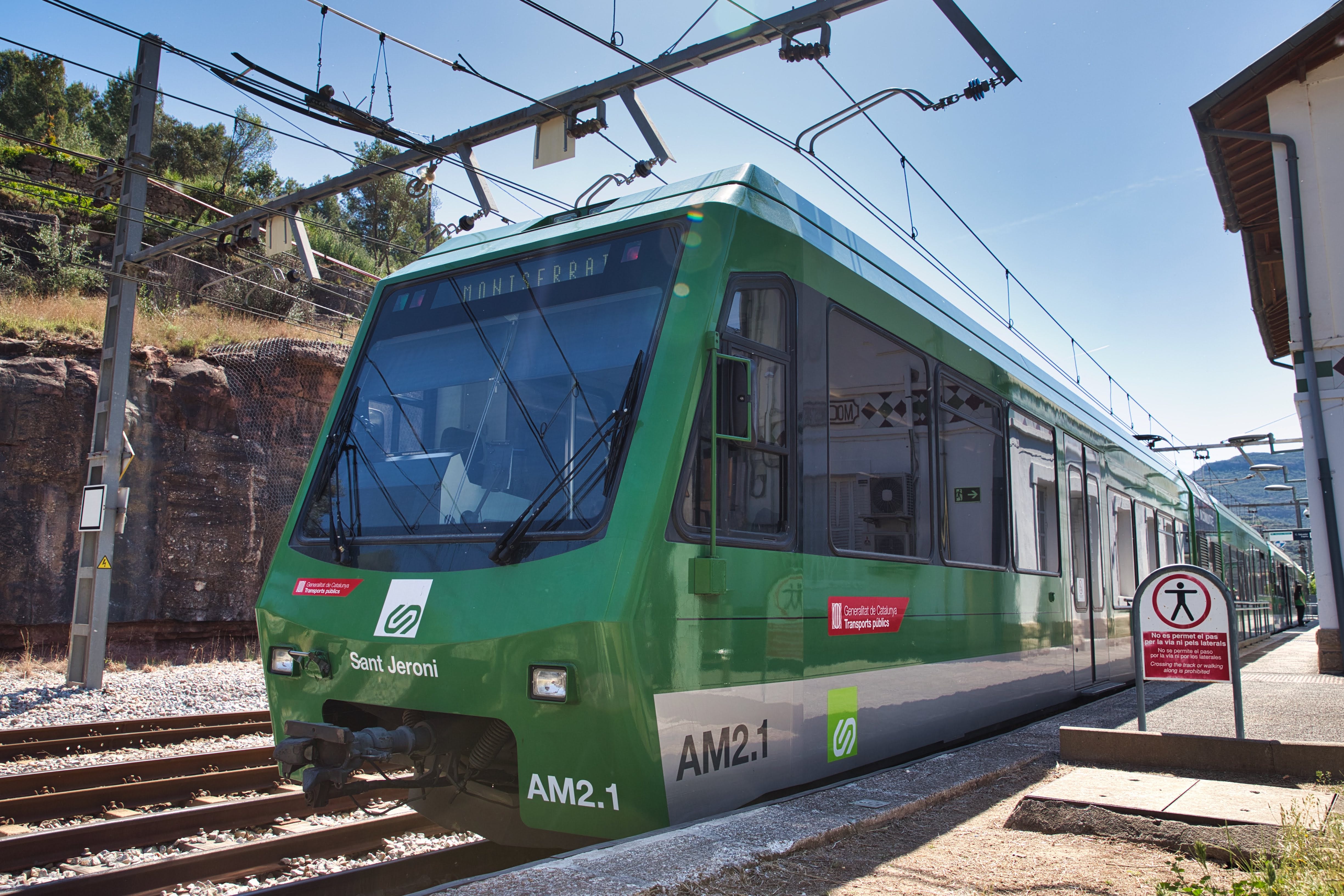
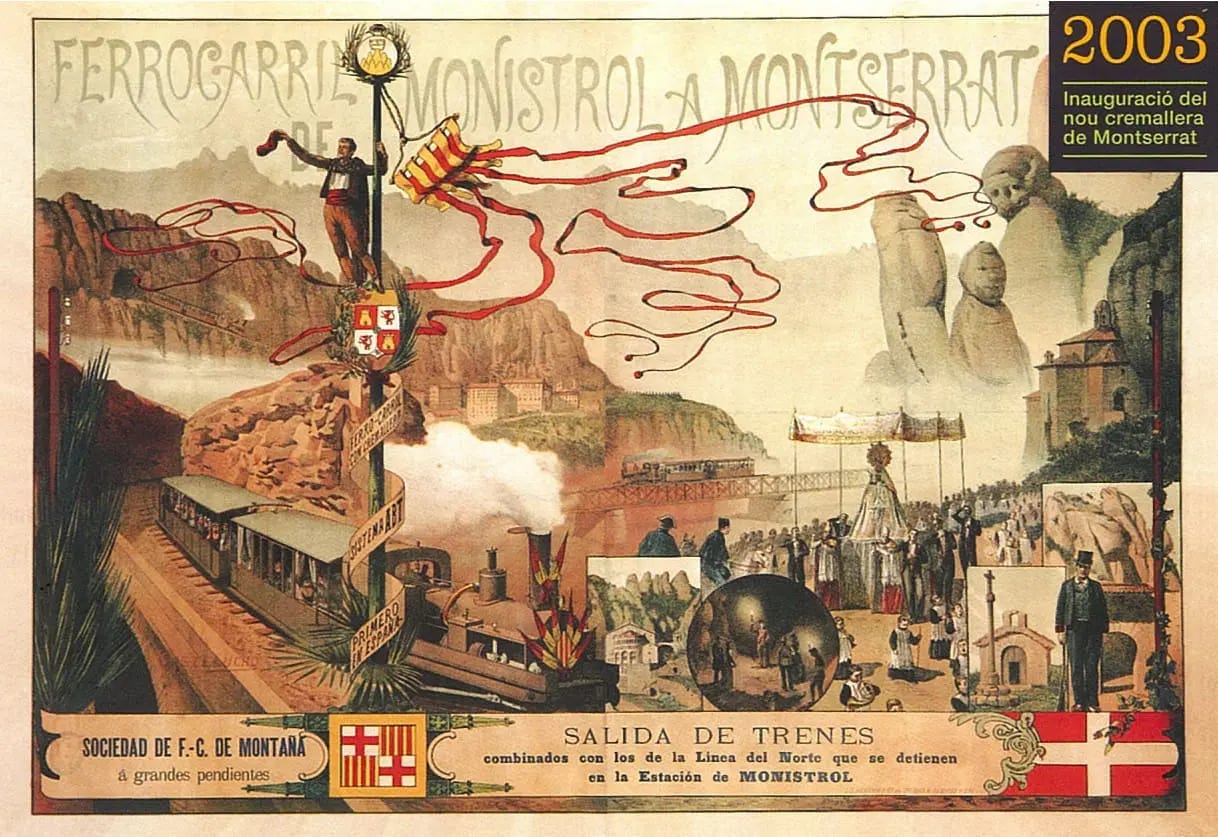
The subject of today’s essay is the Montserrat Rack Railway (Ferrocarril de Monistrol a Montserrat), located in Catalonia, Spain, just an hour north of Barcelona by regional train. It opened in October 1892, becoming the world’s sixth railway of its kind.
The main driver for the railway was the growing number of pilgrims to Montserrat Monastery, often described as Spain’s second most important pilgrimage destination, after the Camino de Santiago. According to legend, the monastery was founded in the 9th century, after a statue of the Virgin hidden in a mountain cave was discovered. The statue worshipped today is a Romanesque carving from the 12th century. It stands about 95 cm (37 inches) tall, and its nickname, La Moreneta, means “the little dark one.”
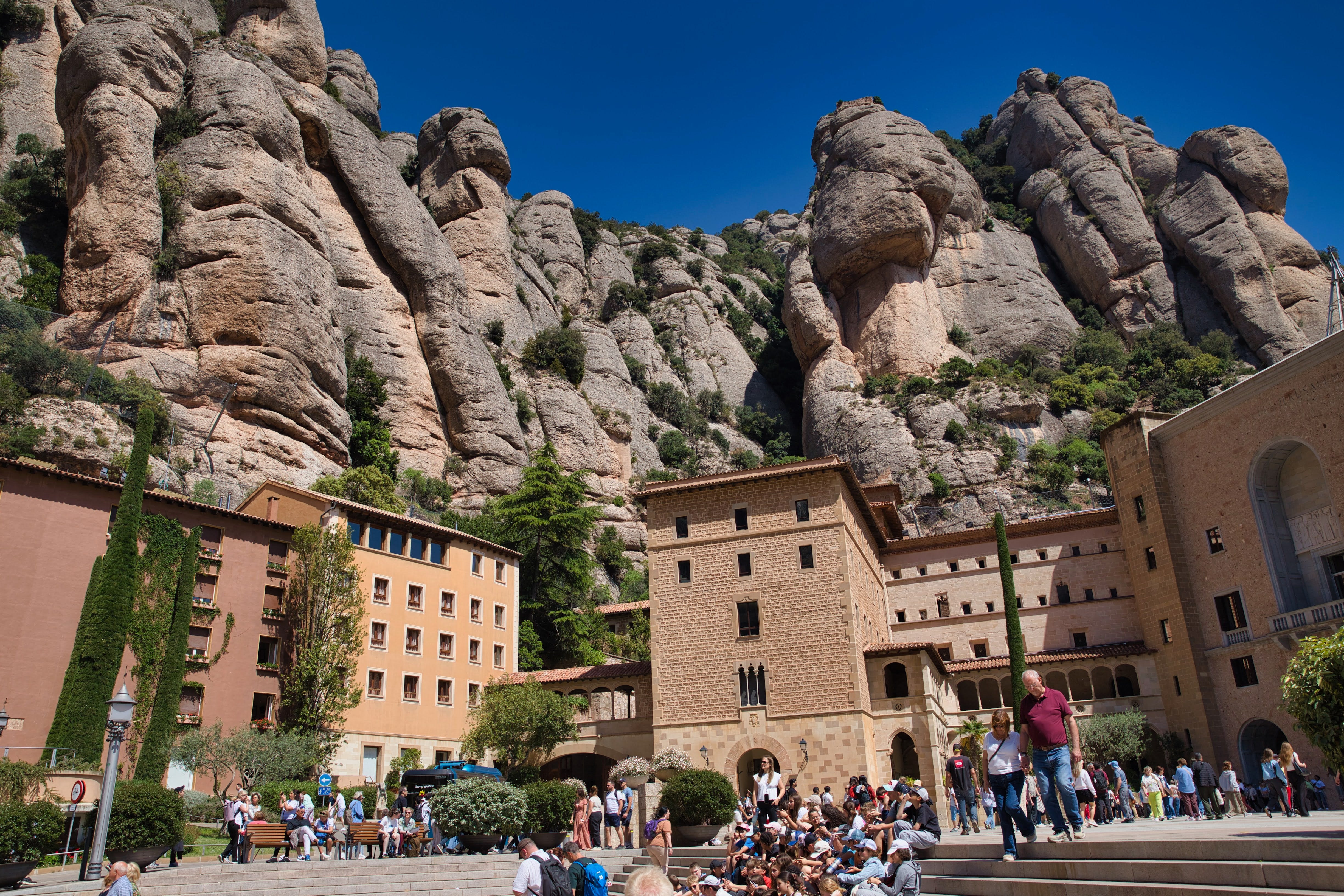
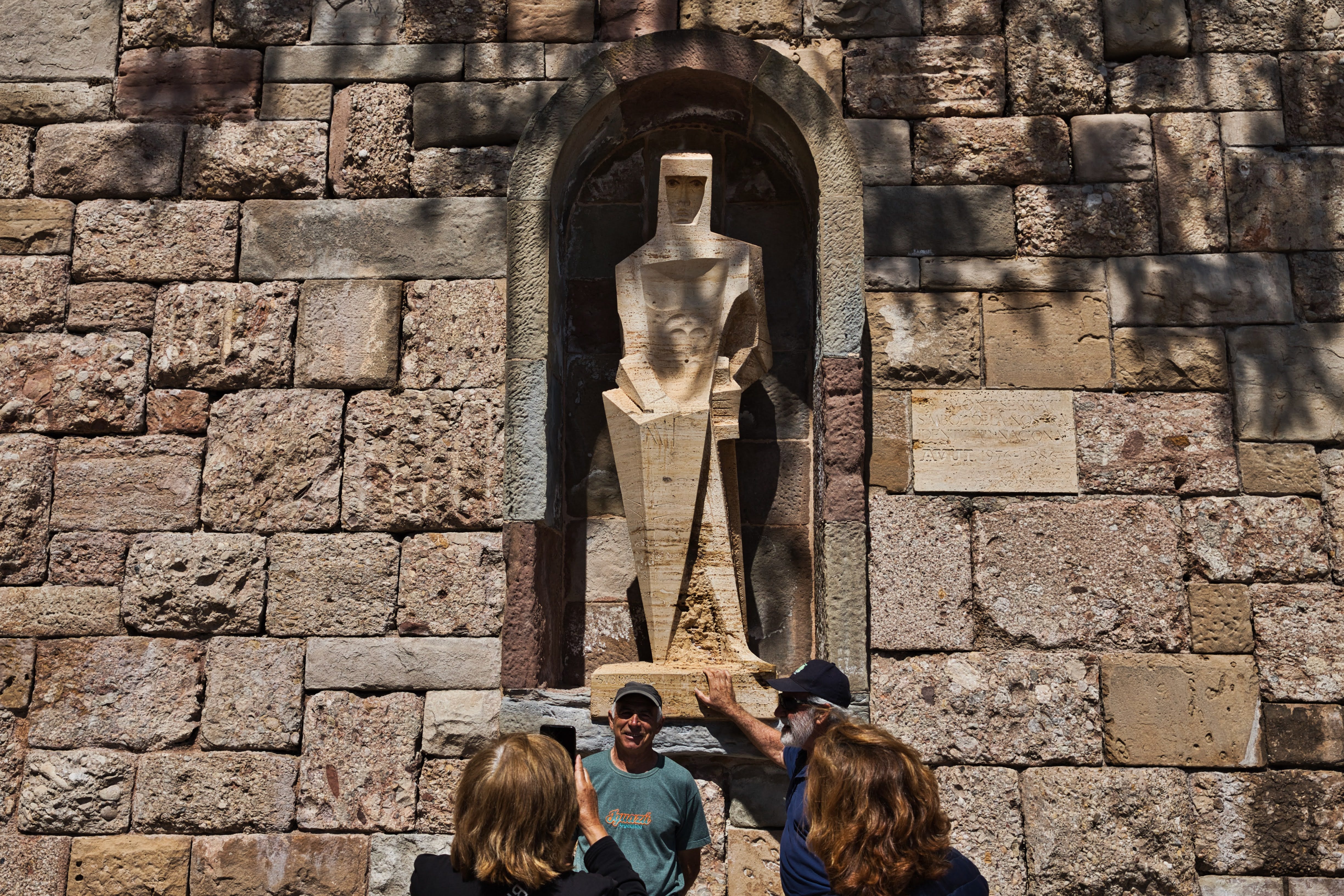
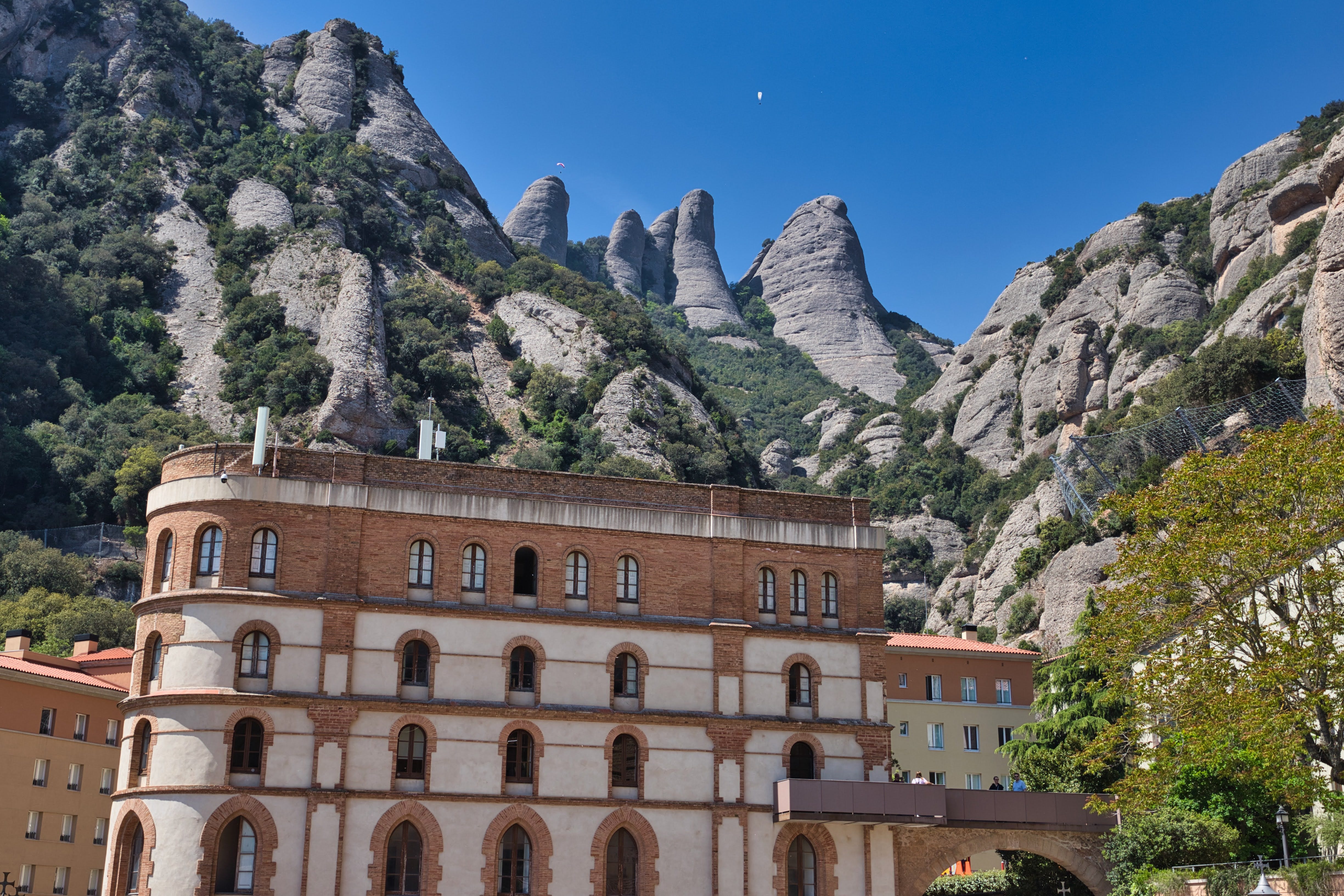
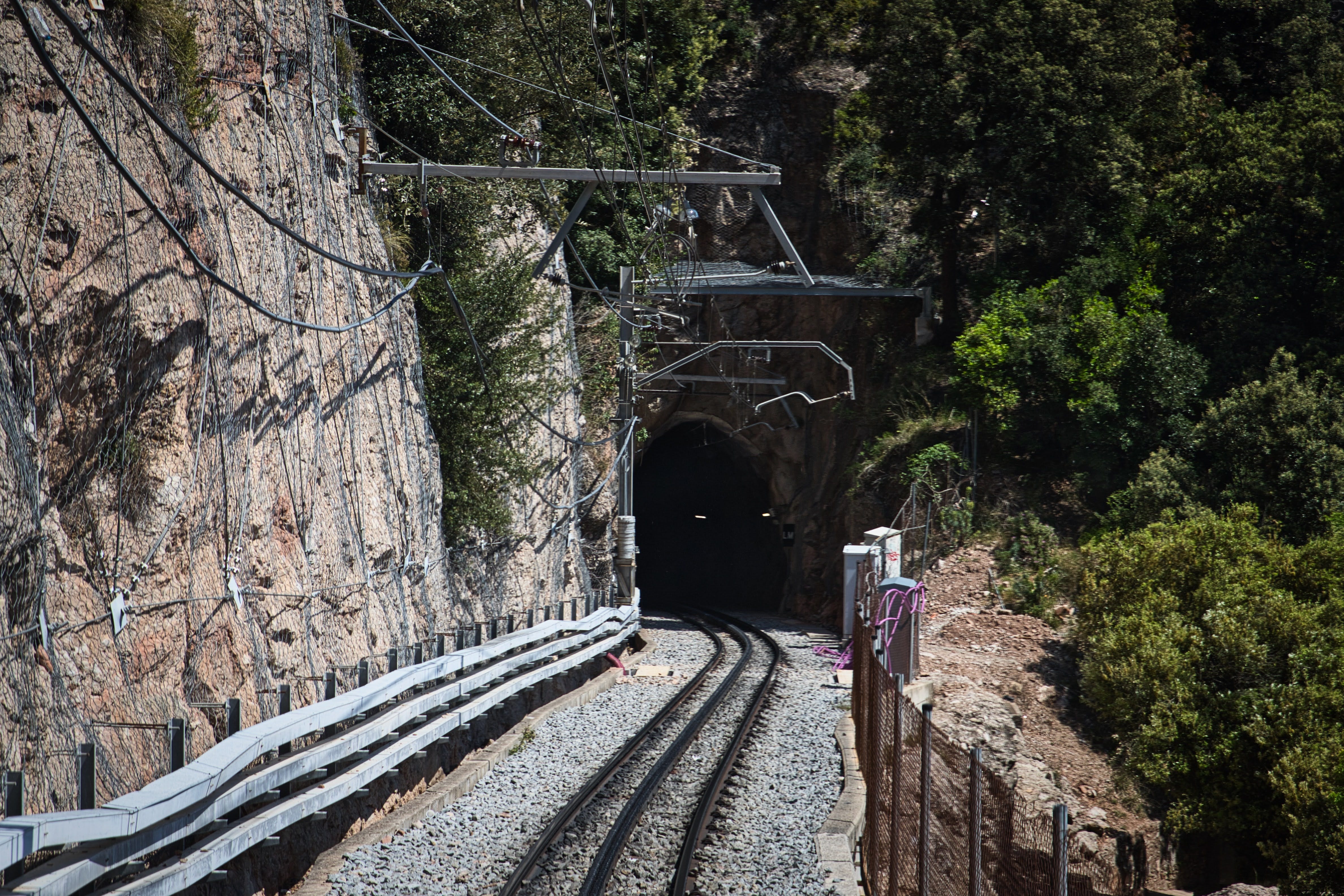
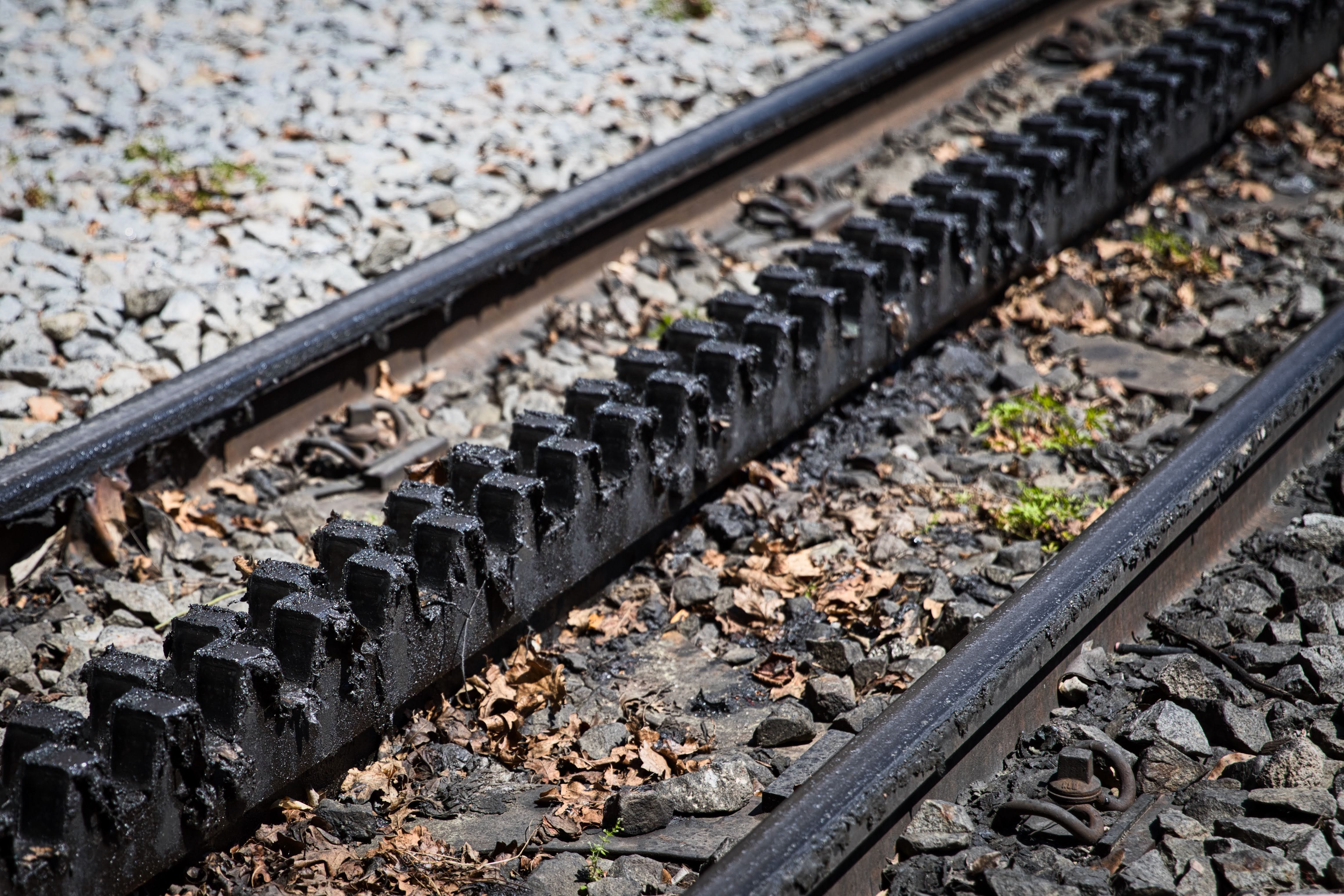
For those wondering what makes a railway a mountain railway, it’s usually the gradient, which can reach up to 48%, like on the Pilatus Railway in Switzerland! On the Montserrat Rack Railway, it reaches up to 15.6%. You might also have noticed the word “rack” in the railway’s name. A rack is a toothed rail laid in the centre of the track. A cog is a gear-like wheel under the train that interlocks with it. It gives the train the much-needed grip to climb up and down safely, which would be impossible for “normal” trains on such steep slopes. That is why these rack railways are also called cog railways, the same thing.
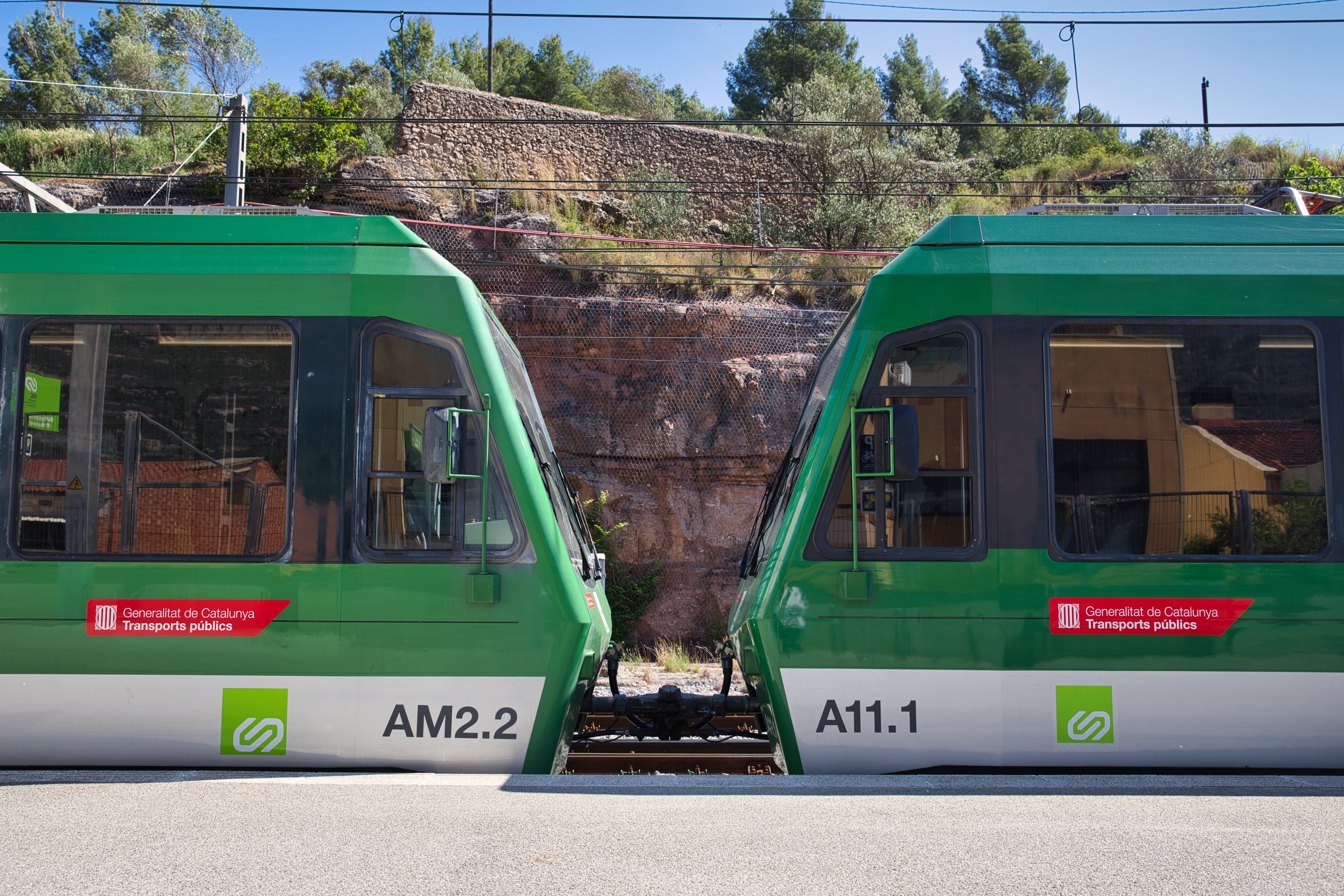
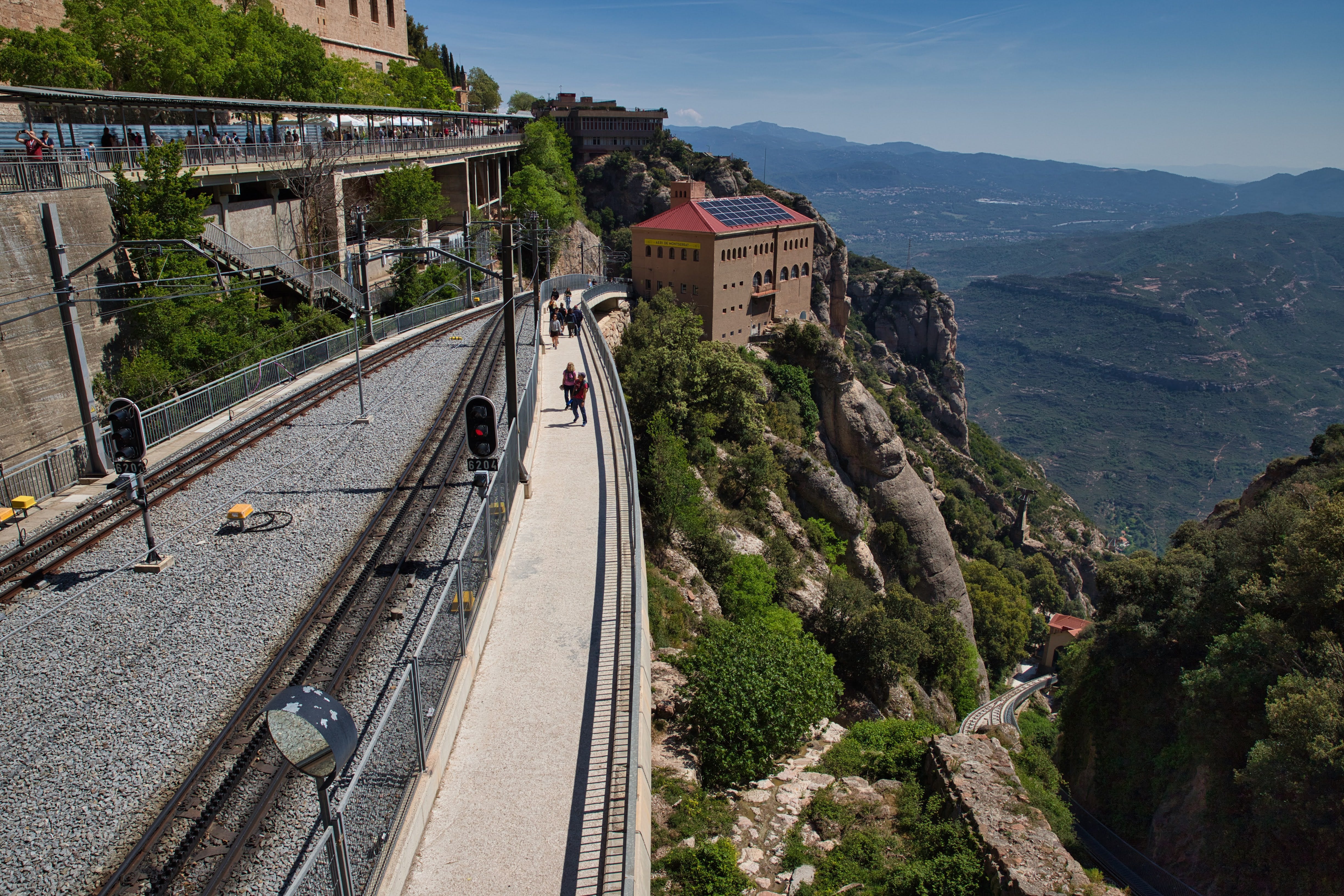
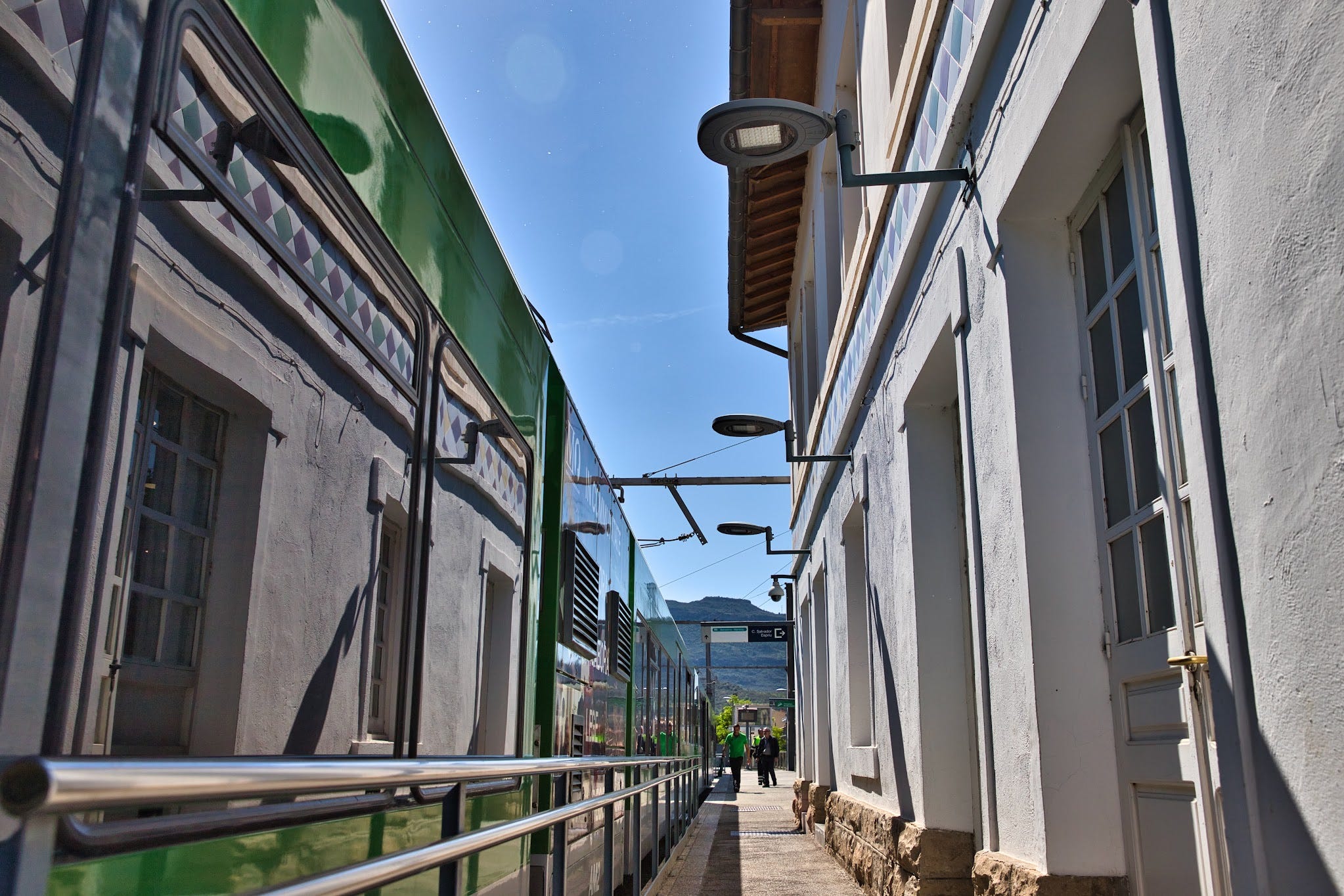
A Spanish engineer, Joaquim Carrera, who frequented the Montserrat Mountains as either a devout worshipper or an avid hiker, chose a rack railway as the gradients were simply too steep for a traditional railway. The timing was perfect: the technology had already been tested in a few different flavours in the mountains of New Hampshire and the Swiss Alps, so Carrera had proven options to choose from.
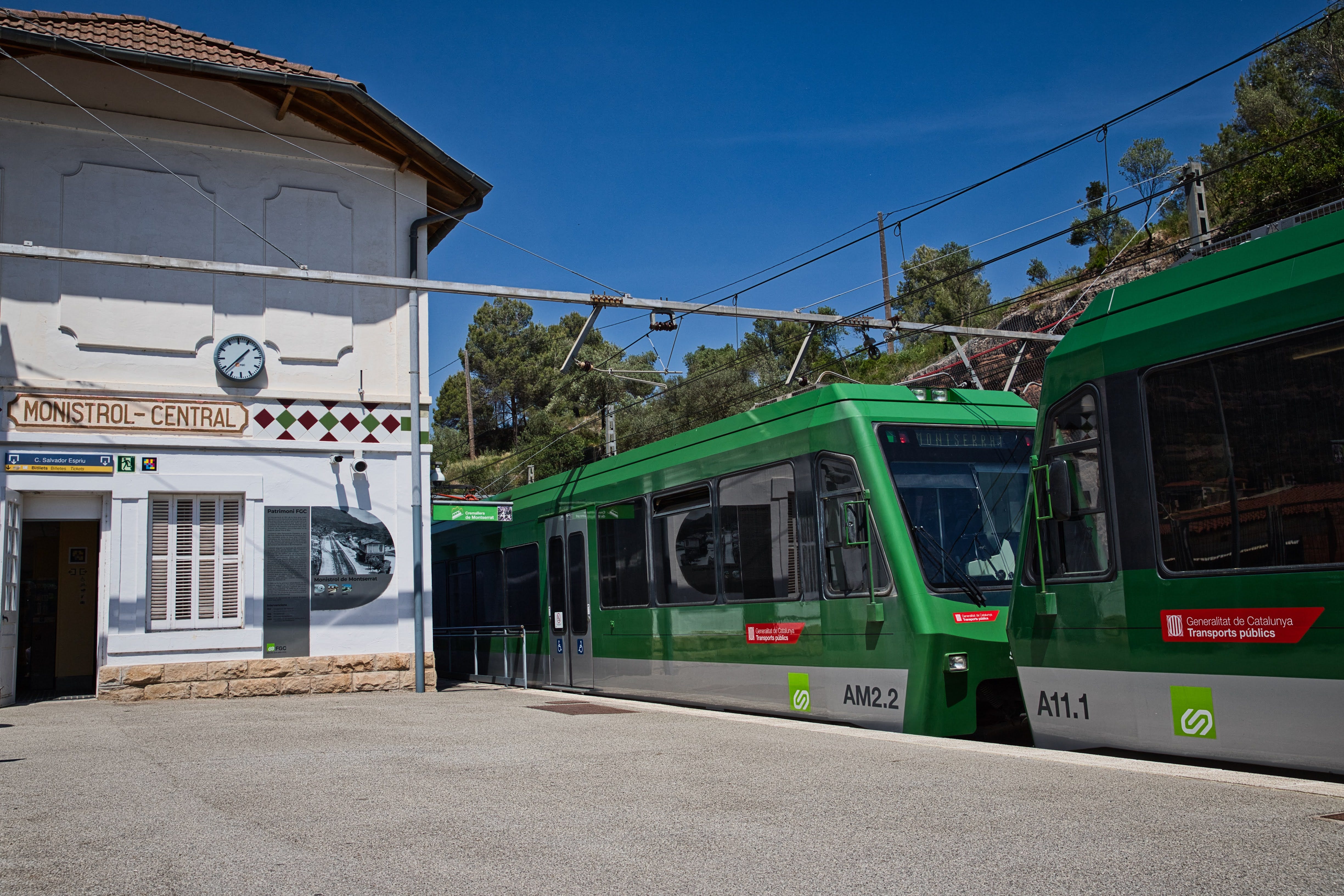
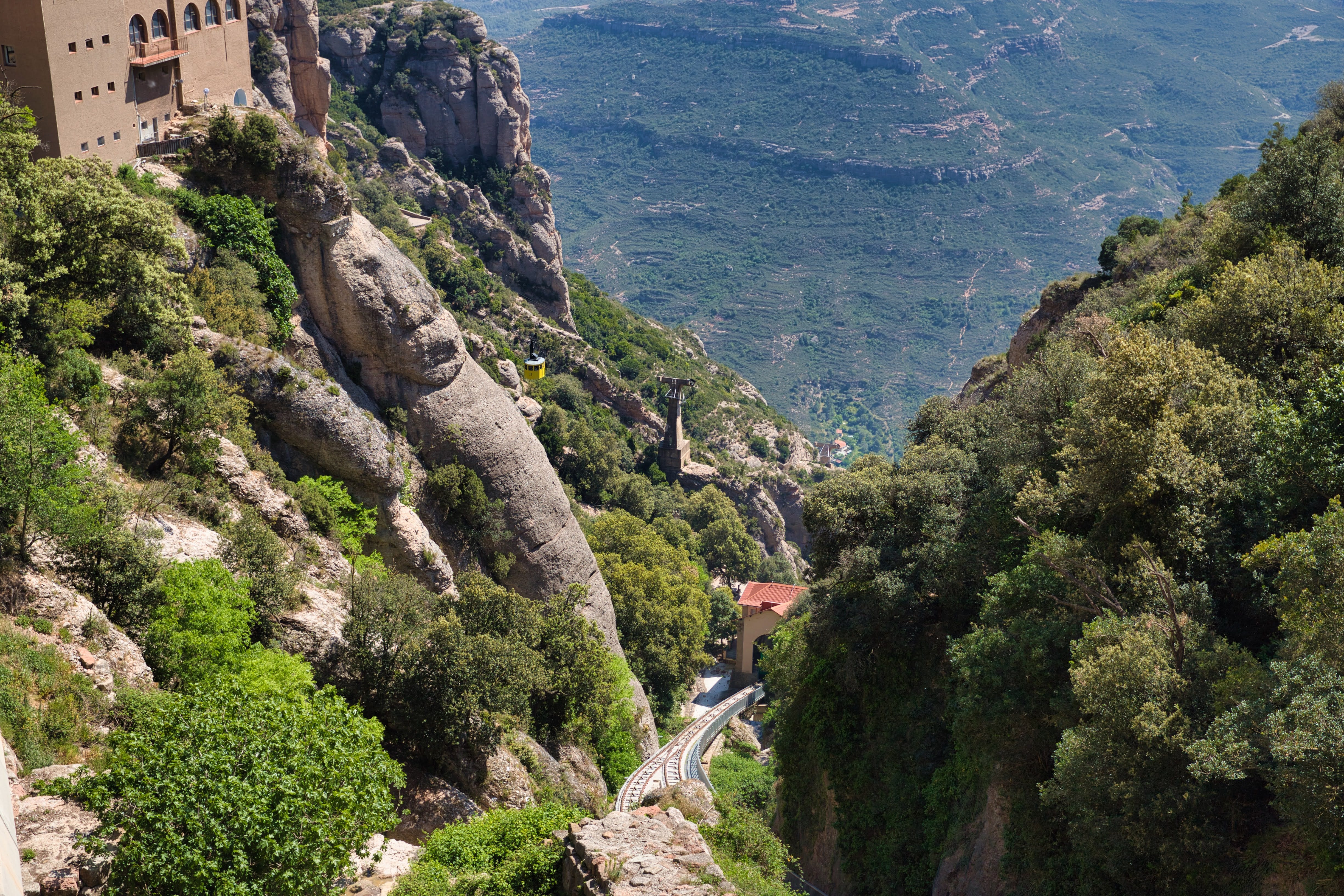
Once opened, the railway was an immediate success. Not only did it allow pilgrims, many of whom were elderly or ill, to visit the monastery, but it also let them do so on a day trip from Barcelona. Previously, the monastery could only be reached on foot, on horseback, or by stagecoach. The opening of the Aeri de Montserrat aerial cable car in 1930 gave visitors a much faster alternative to the slow steam train.
New Hampshire Built a Railroad to the Moon

The Mount Washington Railway is the world’s first mountain-climbing cog railway. Opened in 1869, it remains the second-steepest in the world, with grades reaching up to a remarkable 37%! It’s an engineering marvel that solved a difficult problem in an era when people believed anything was possible. At the same time, the train offers a spectacular journe…
The company, which was operating the trains, ran into financial trouble in the 1940s and 1950s, but the last nail in the coffin was a deadly accident in 1953, which led to the railway’s closure in 1957 as people were afraid to run it. On Saturday, July 25, 1953, during Monistrol de Montserrat’s Festa Major, the town’s biggest celebration of the year, a train ran backwards down the slope and hit another train, and both then hit a third. Eight people died, and more than 100 were injured. Two of the railway’s eight locomotives were scrapped as a result. Interestingly, I did some research to find out why a train slid down in the first place since the rack technology should have prevented exactly that, but I could not find anything that would explain the root cause. So if you know more, please point me out in the right direction.
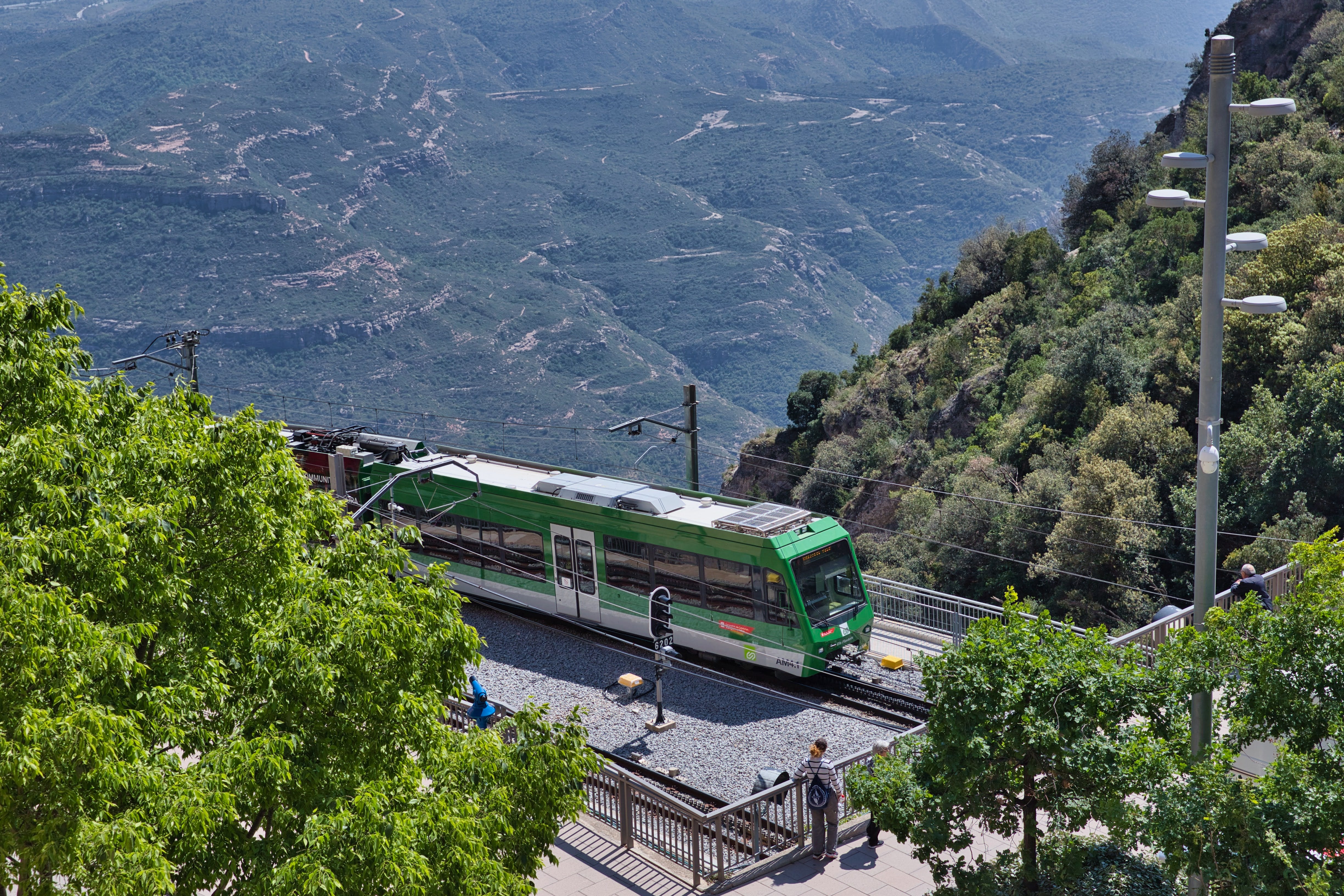
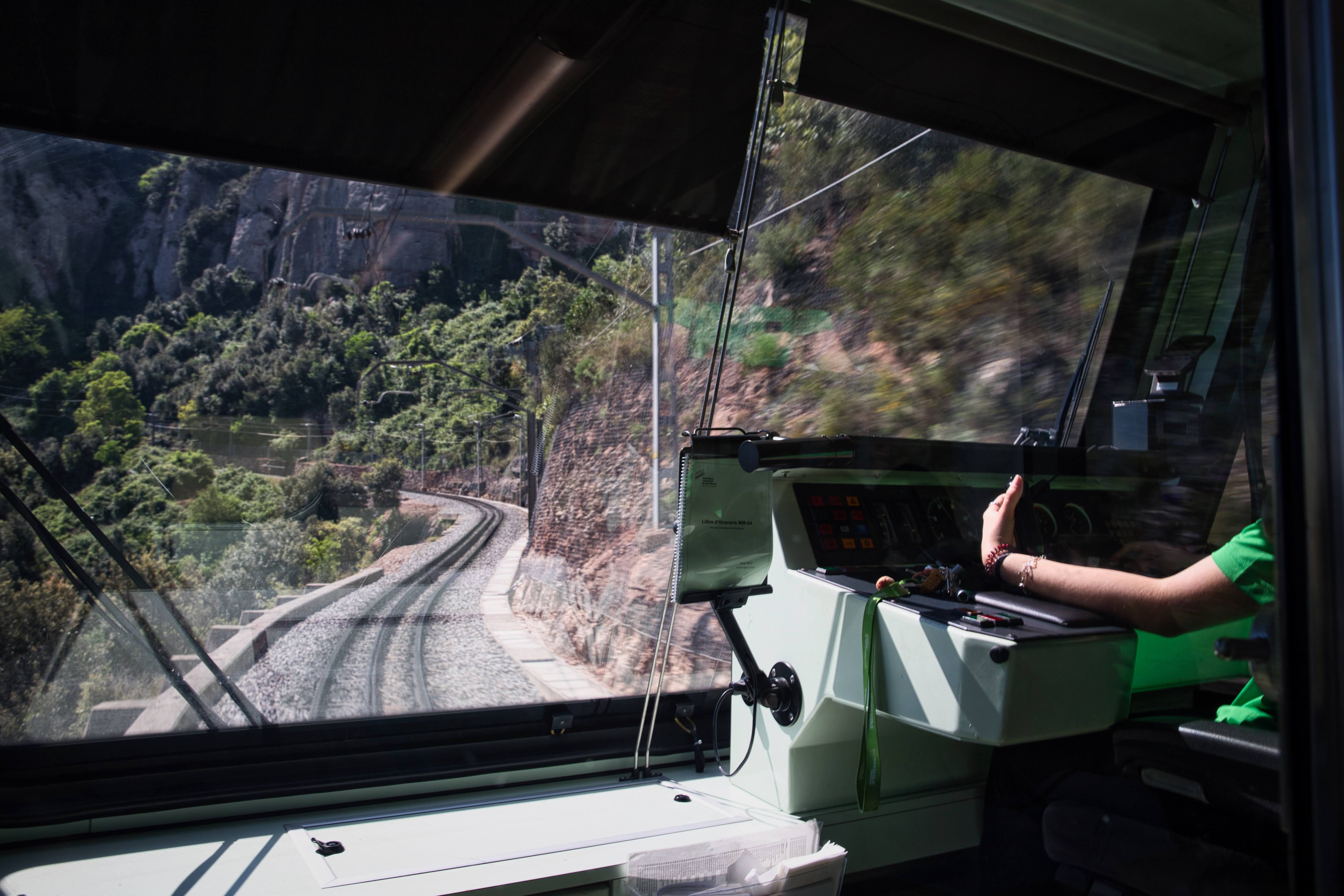
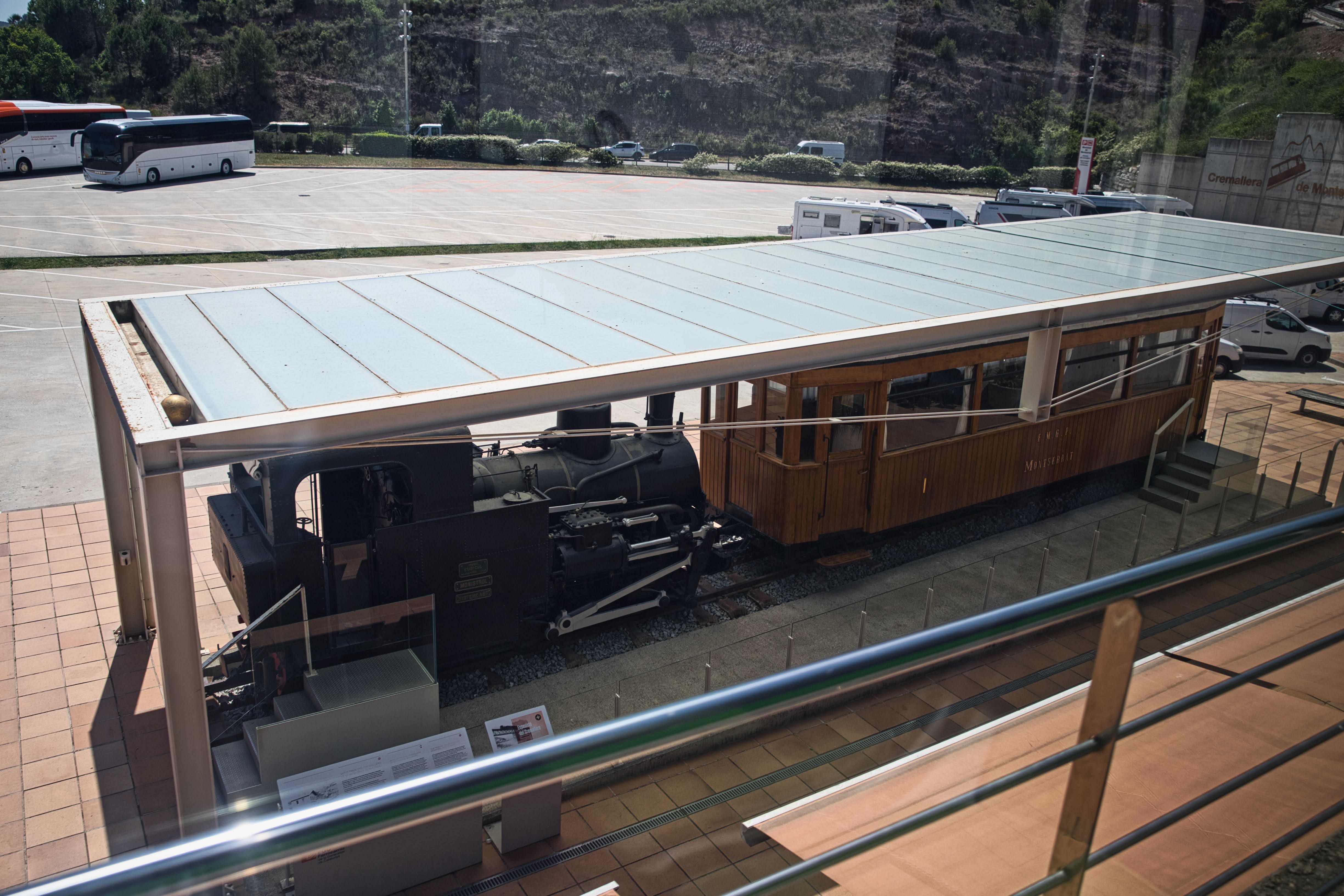
It took almost 50 years to rebuild the railway. It opened in June 2003 and, as with the original opening in 1892, was immediately a huge success. It carried over 450,000 passengers in its first year of operations, and is still going strong after more than 20 years.
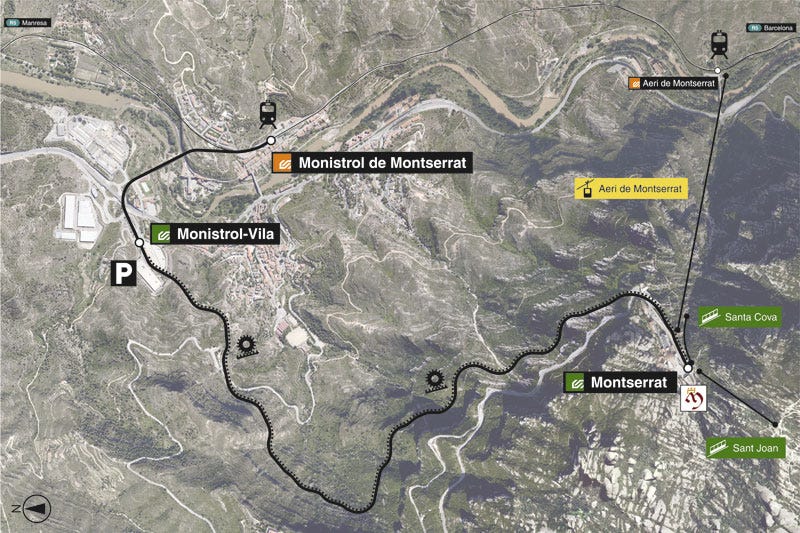
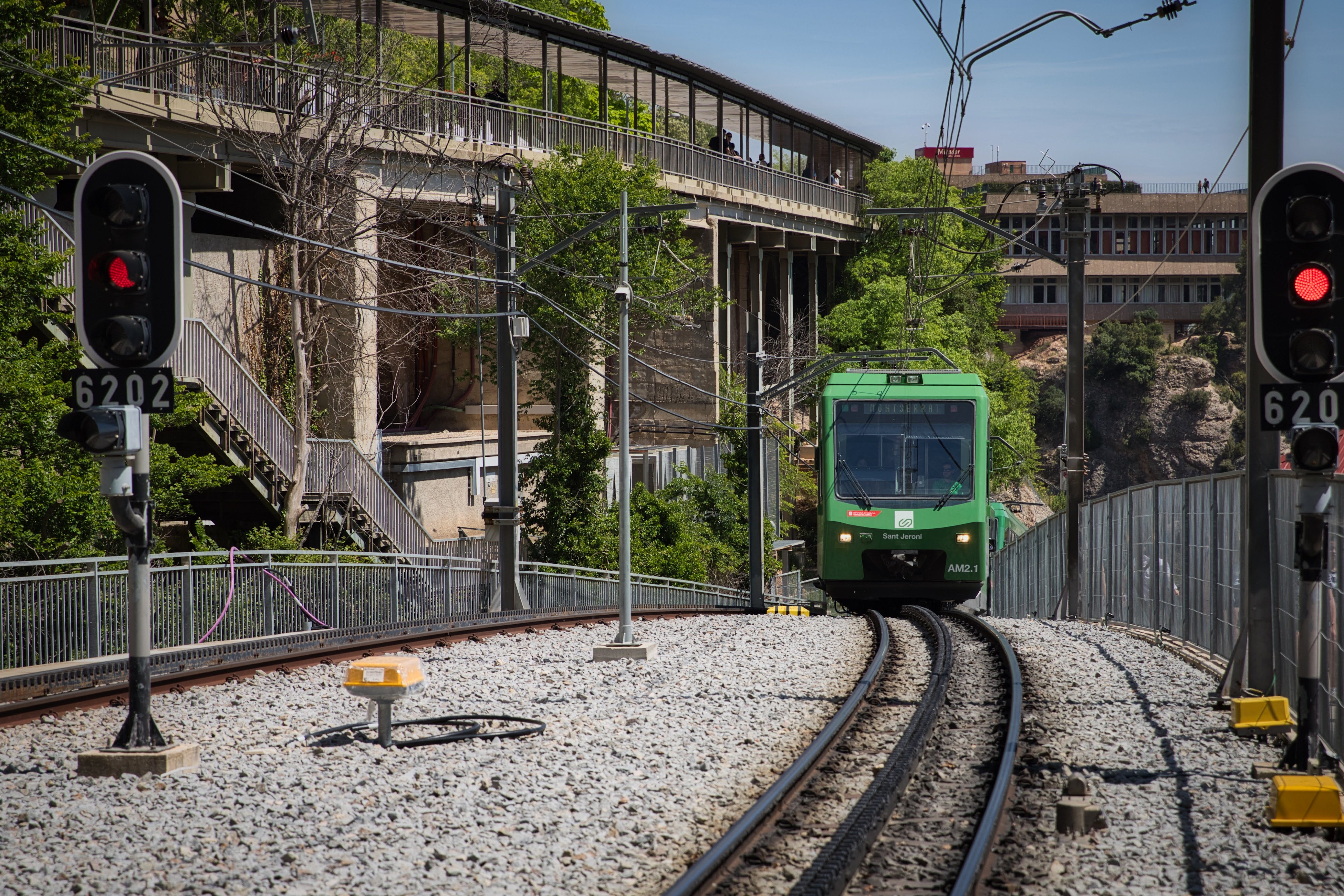
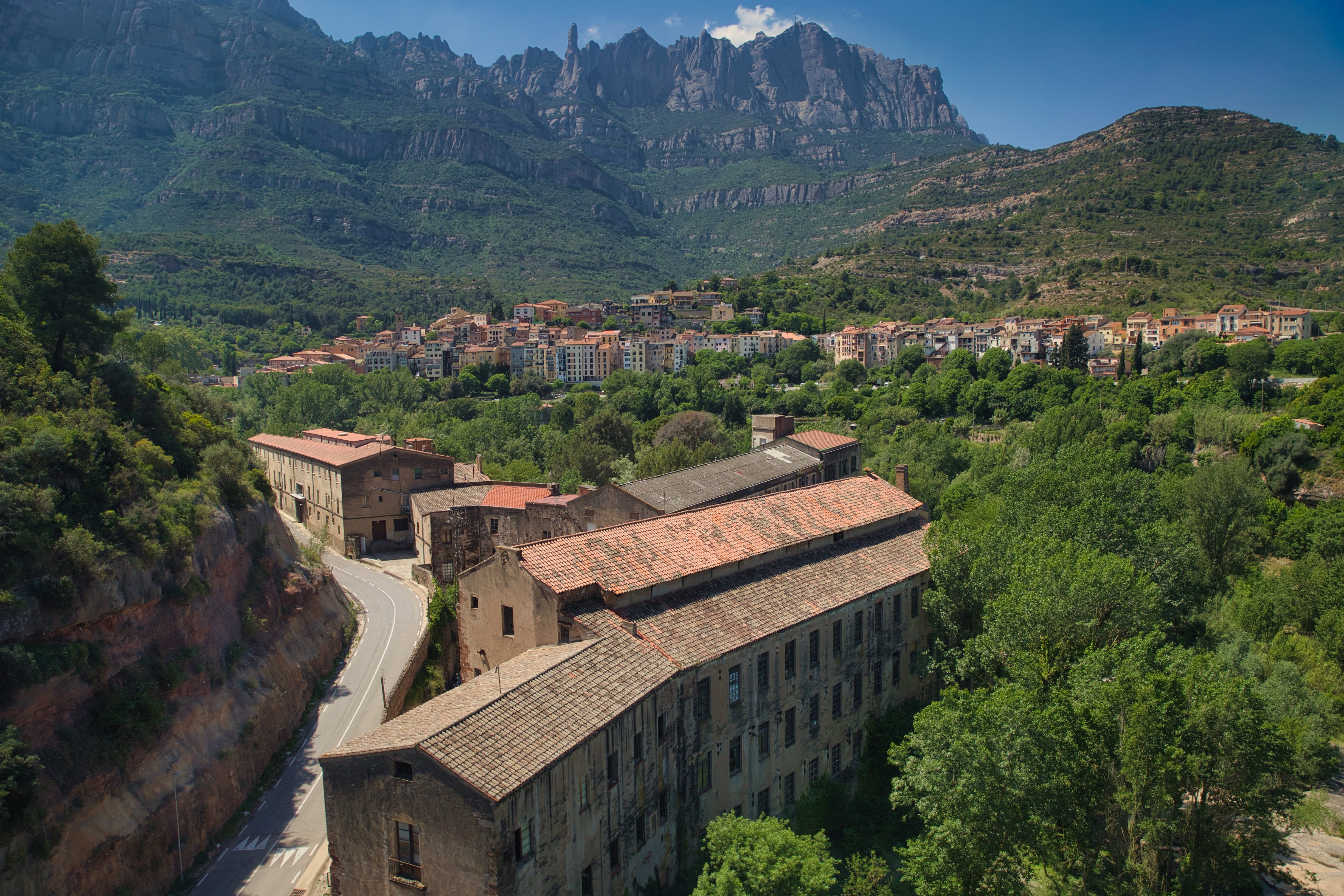
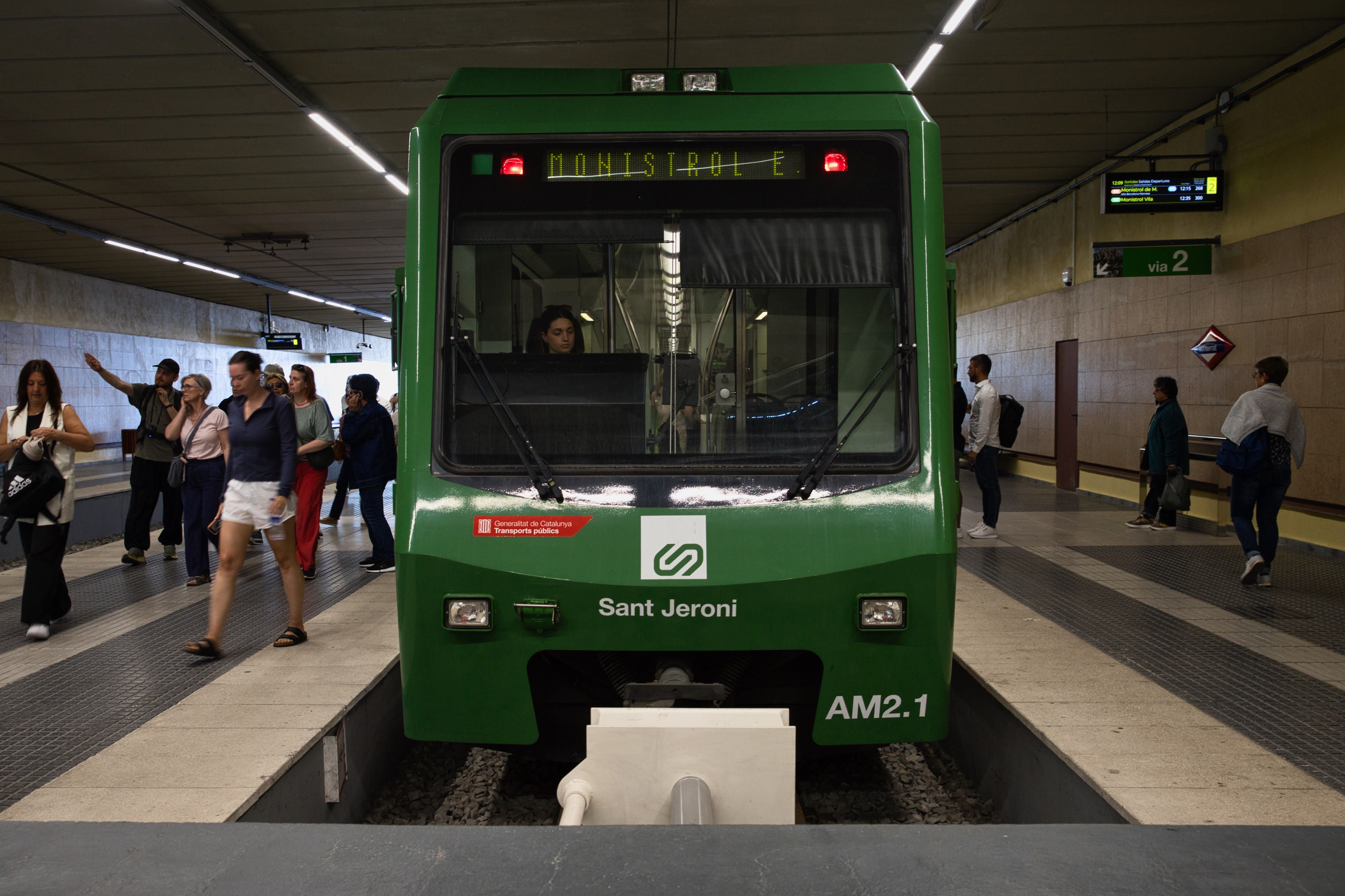
This time, the line was electrified and runs modern Swiss trains built by Stadler. The new route differs slightly at the bottom of the line, but is mostly the same up the mountain. The gradient is essentially the same, because the steepest stretch follows the original alignment. The old line ran 8.6 km (5.3 miles), while the new one is 5.3 km (3.3 miles), of which 4.1 km (2.5 miles) is rack. This is correct: a train runs without a rack between the terminus station of Monistrol de Montserrat and the intermediate station of Monistrol-Vila since it’s mostly at grade.
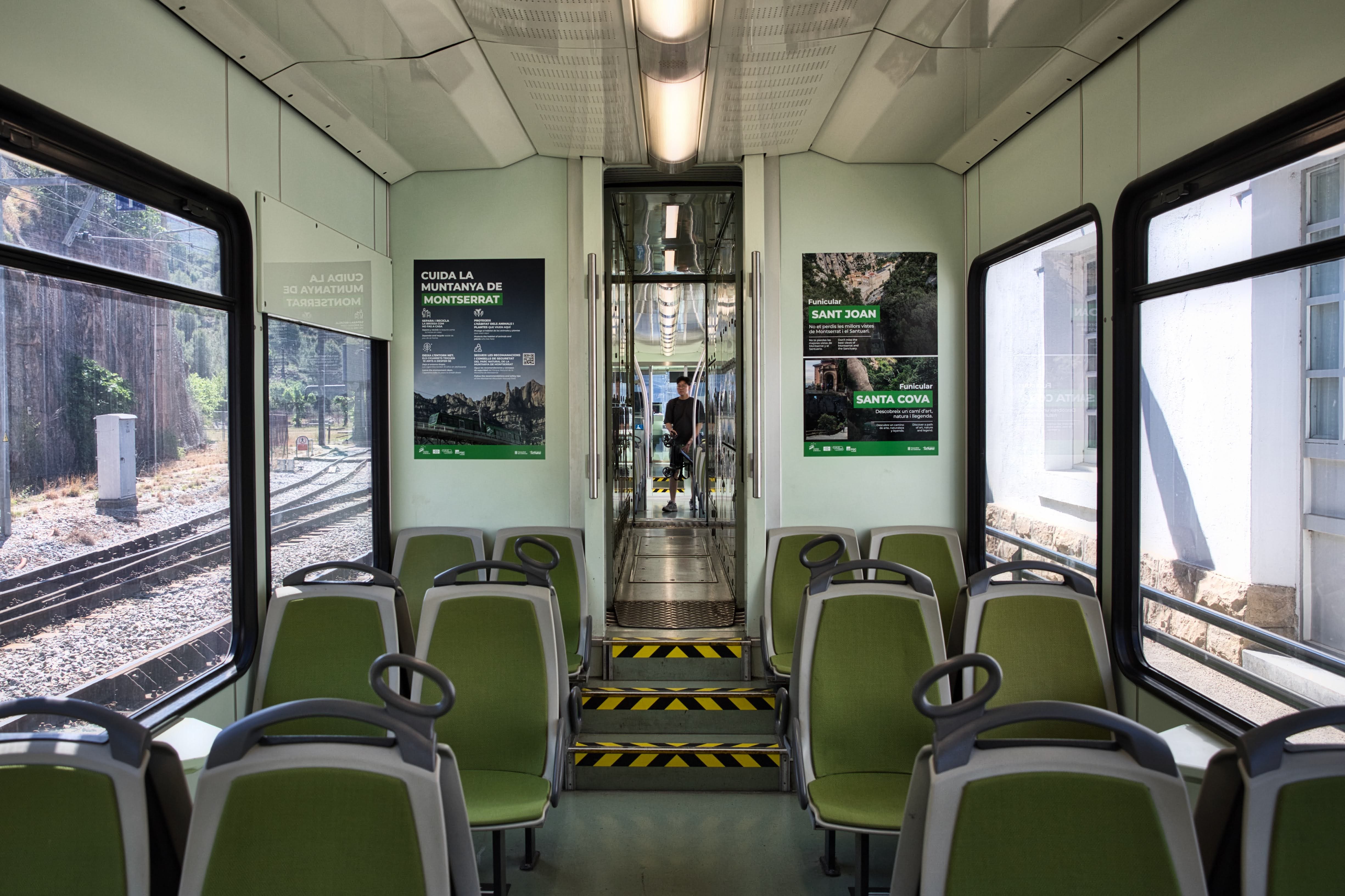
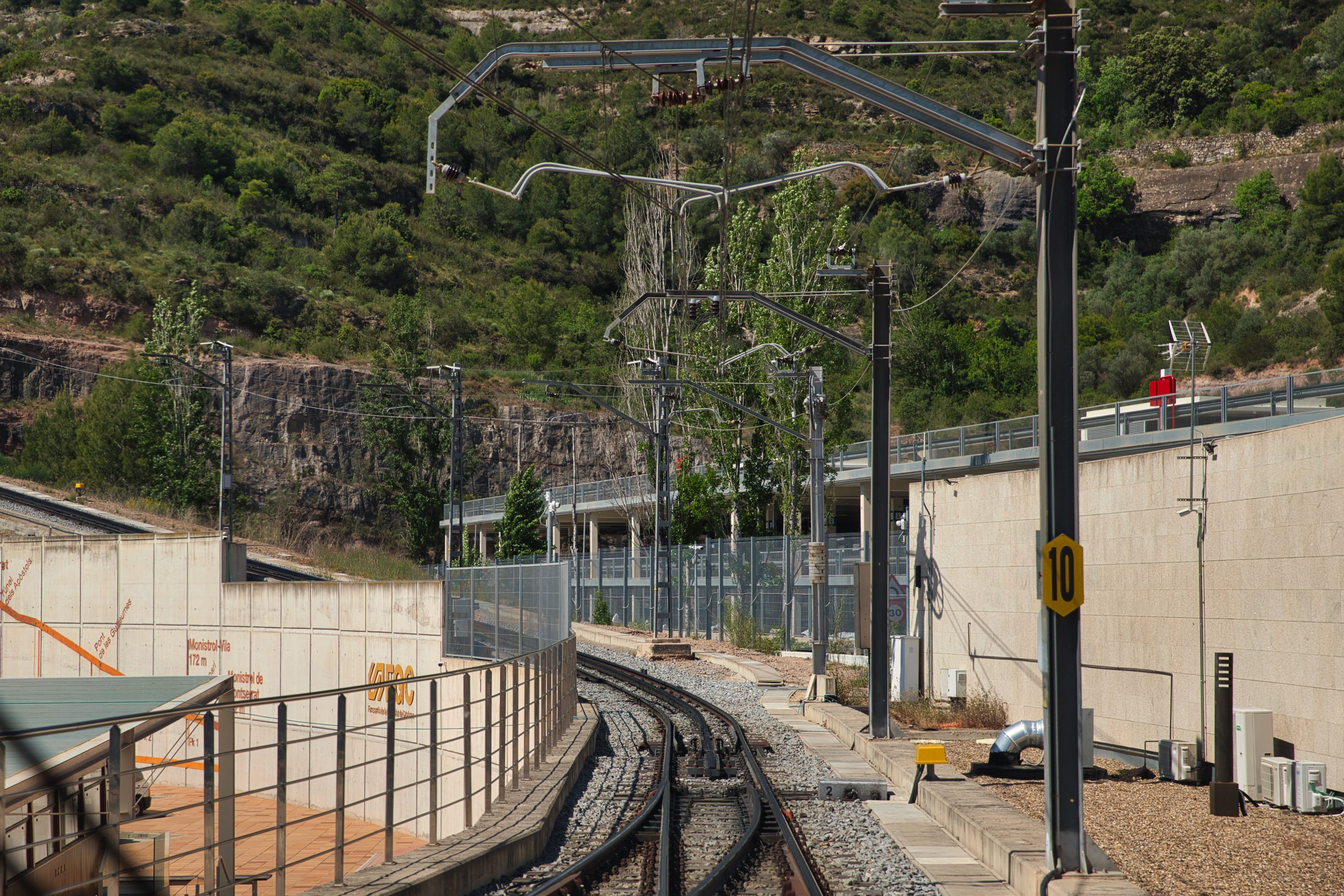
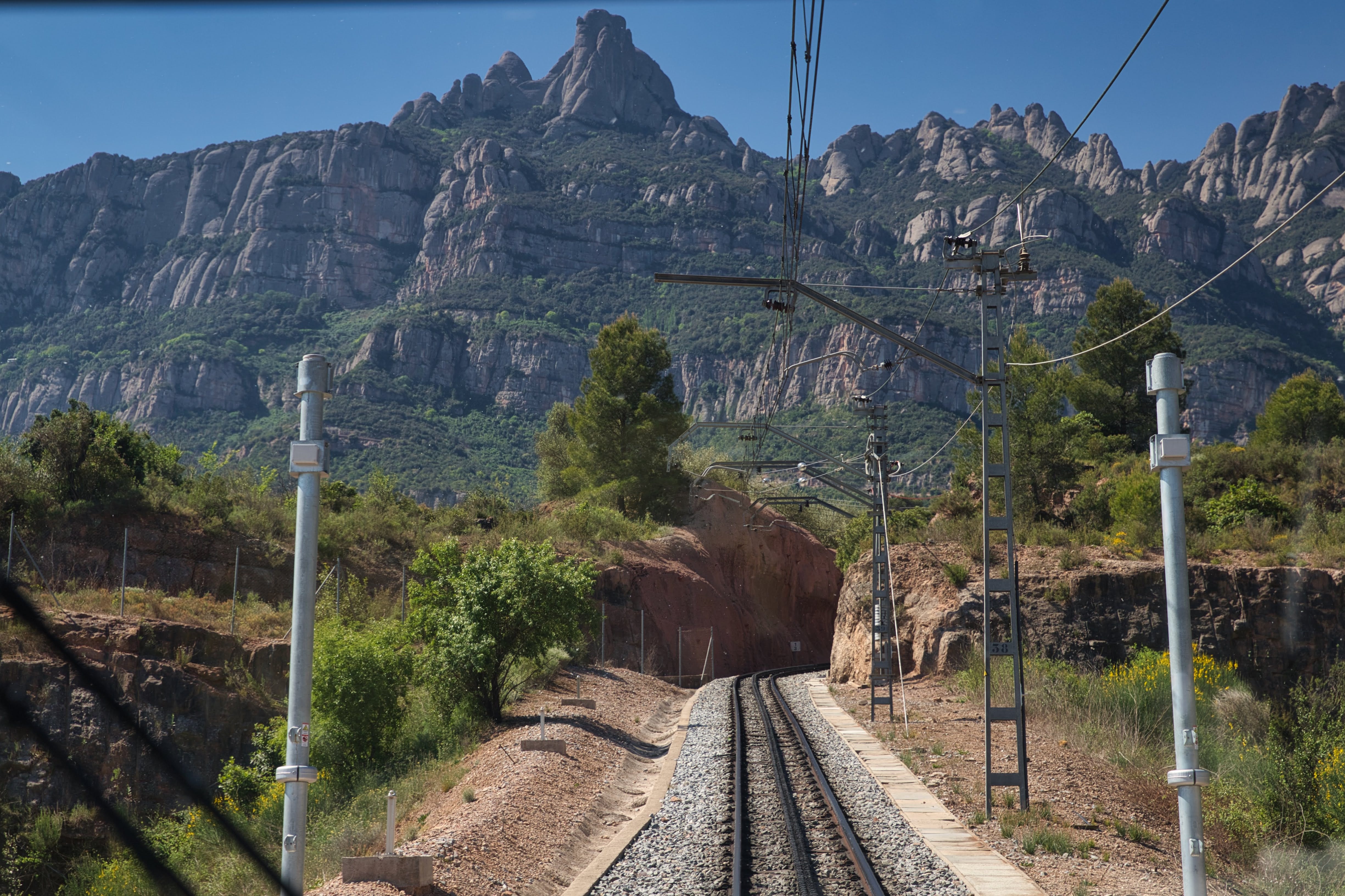
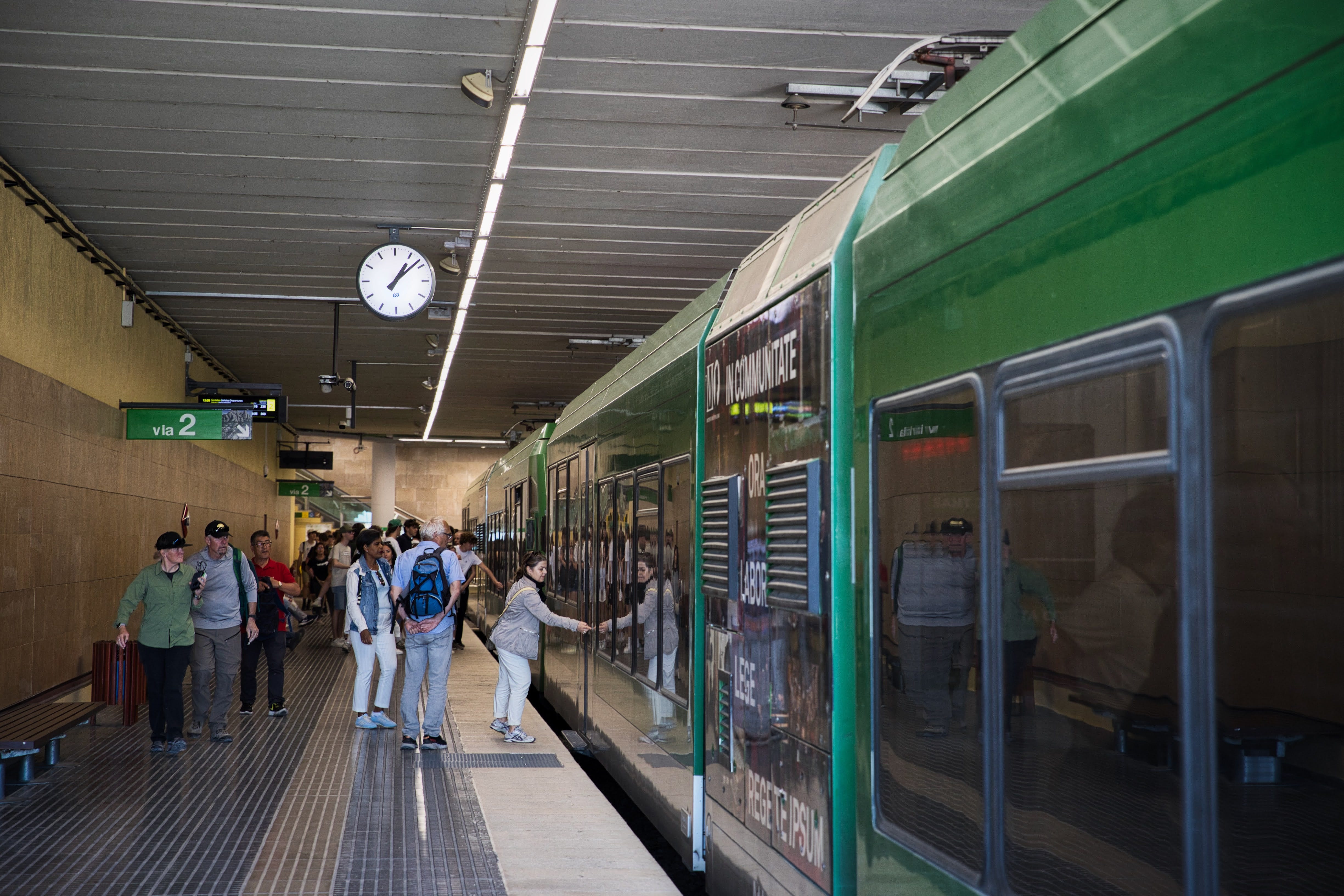
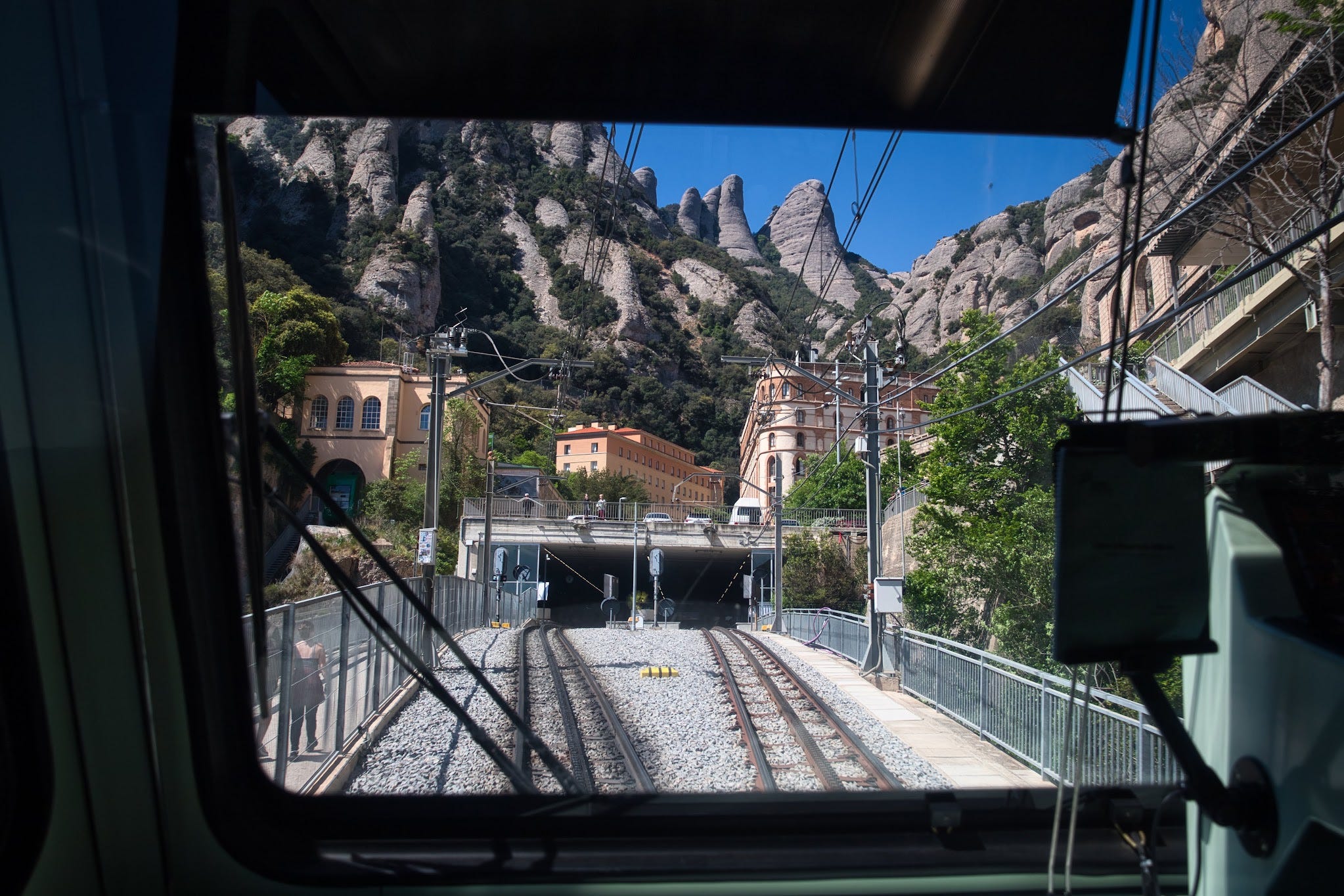
A train can carry up to 200 passengers and climbs about 550 m (1,800 ft) in roughly 20 minutes from Monistrol de Montserrat, or about 13 minutes from Monistrol-Vila. If you sit on the left as the train climbs, the views from the windows are just spectacular!
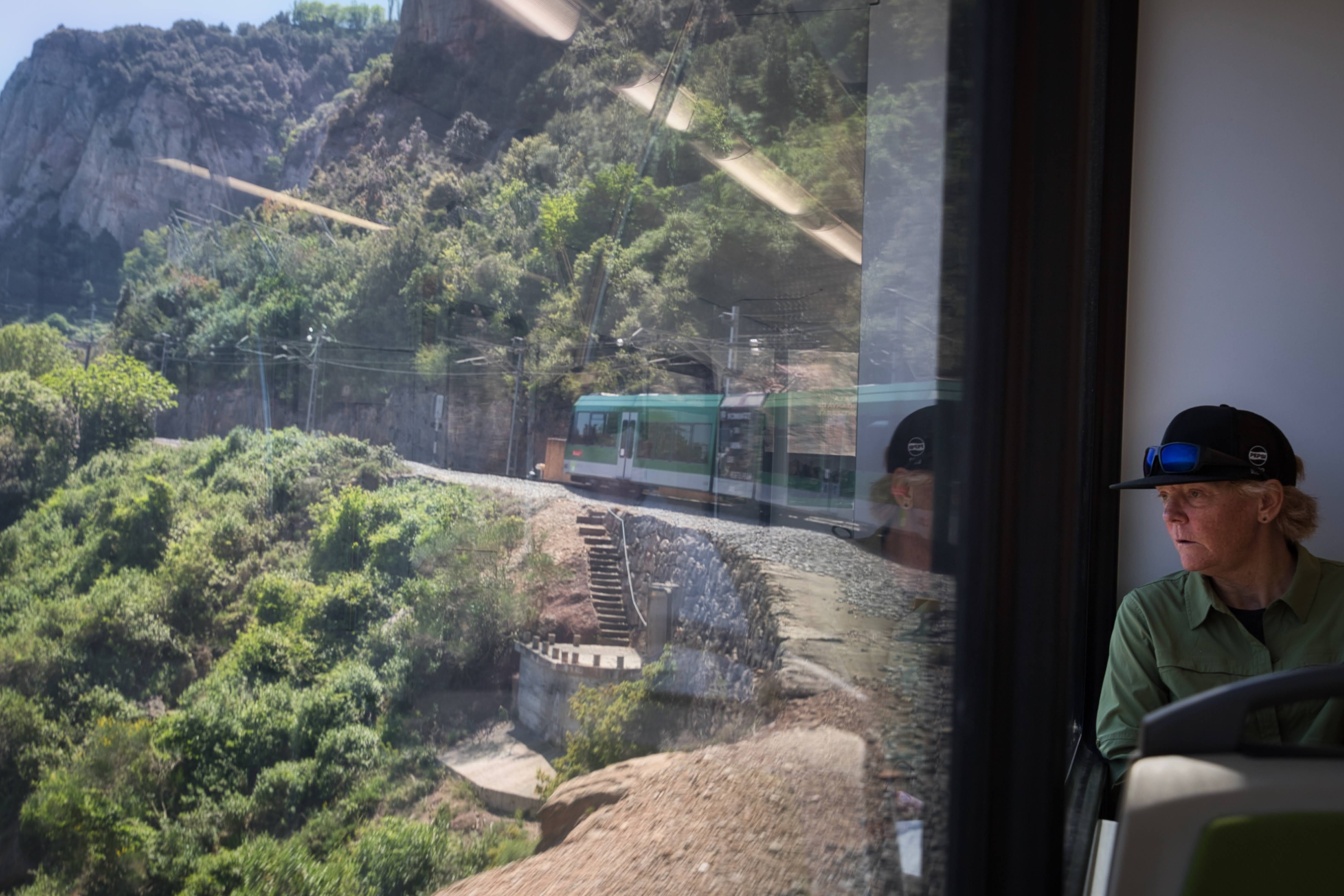
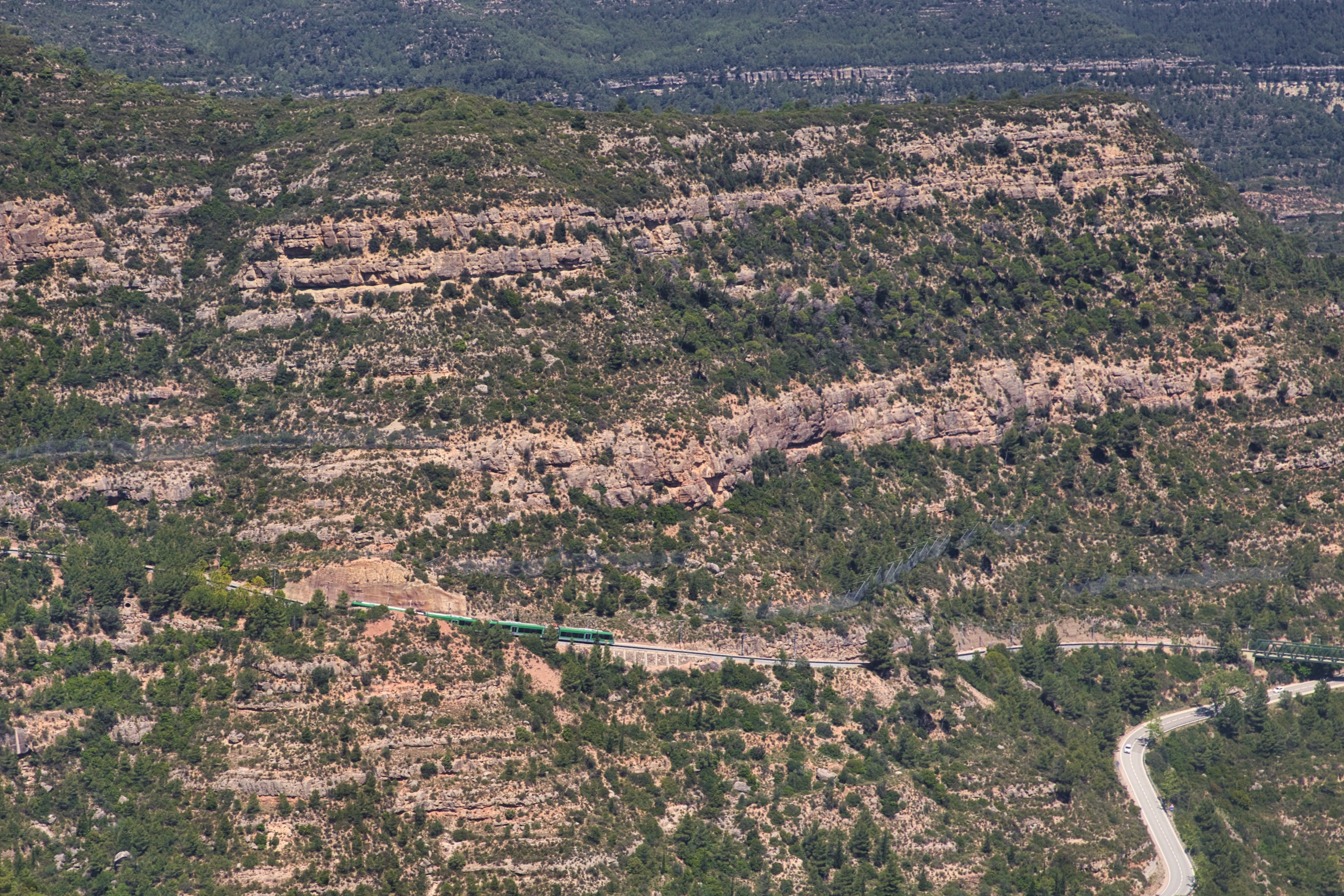
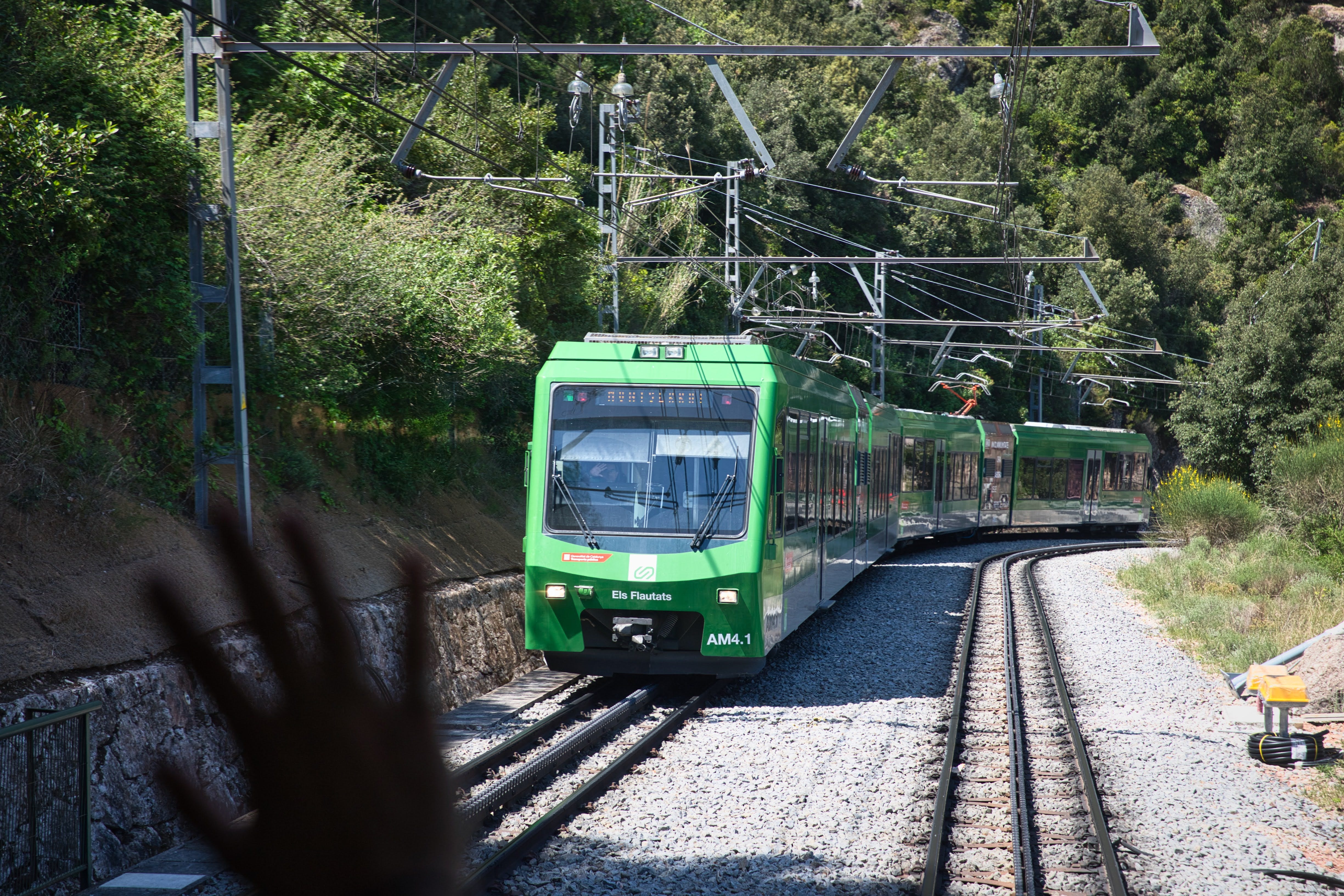
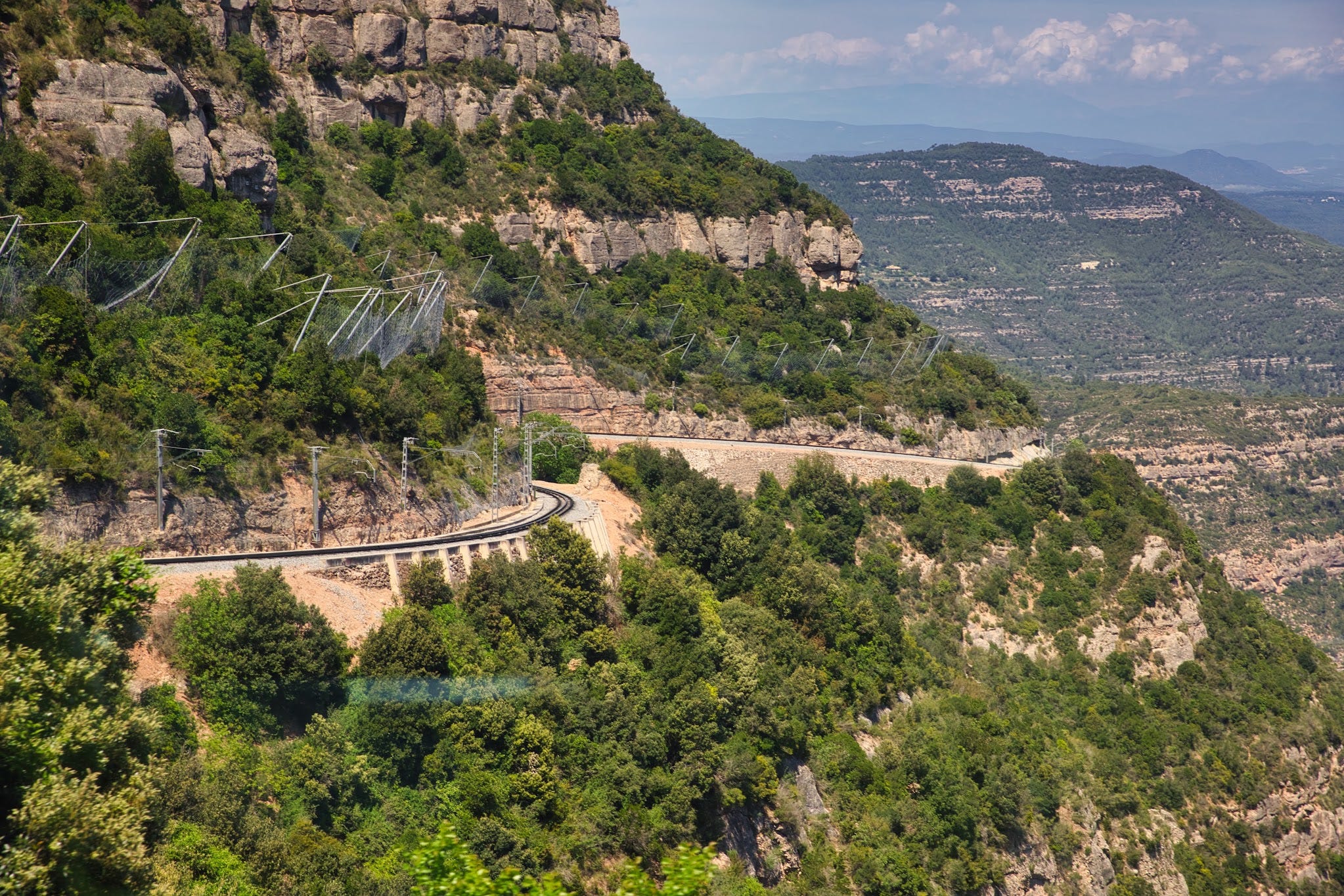
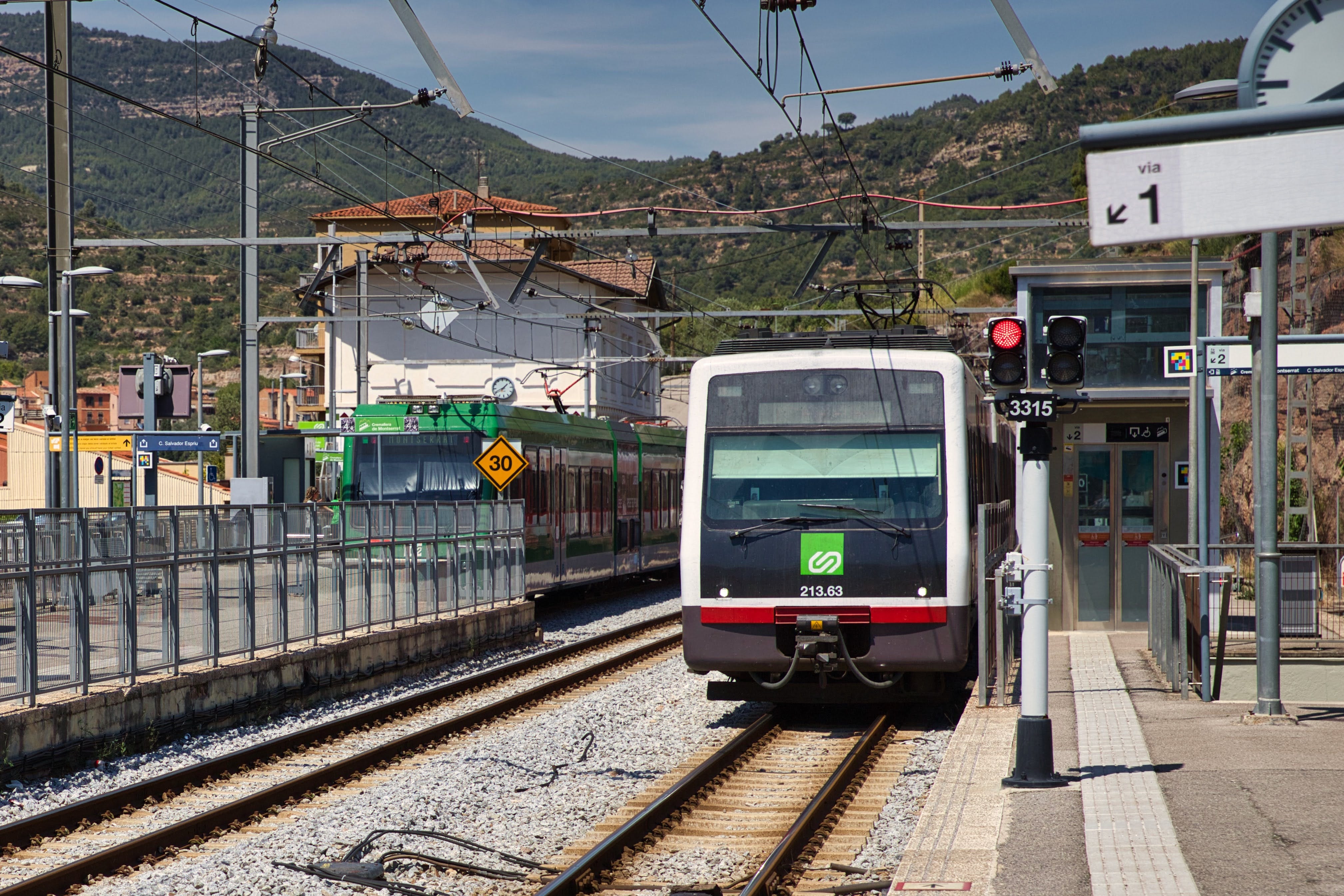
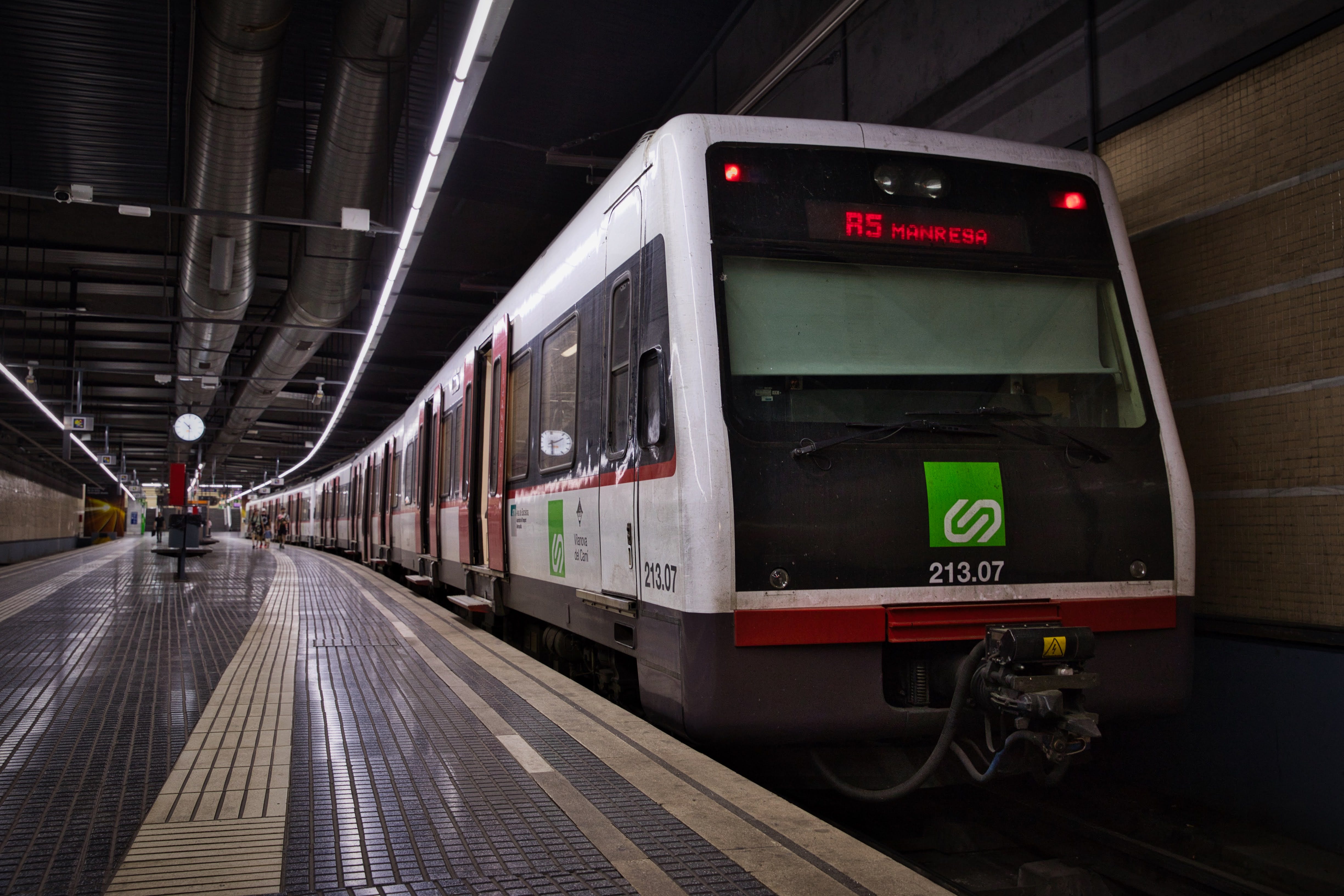
What I appreciated most is that the Montserrat Rack Railway connects conveniently with the regular R5 regional train, which runs all the way to Plaça d’Espanya in Barcelona.
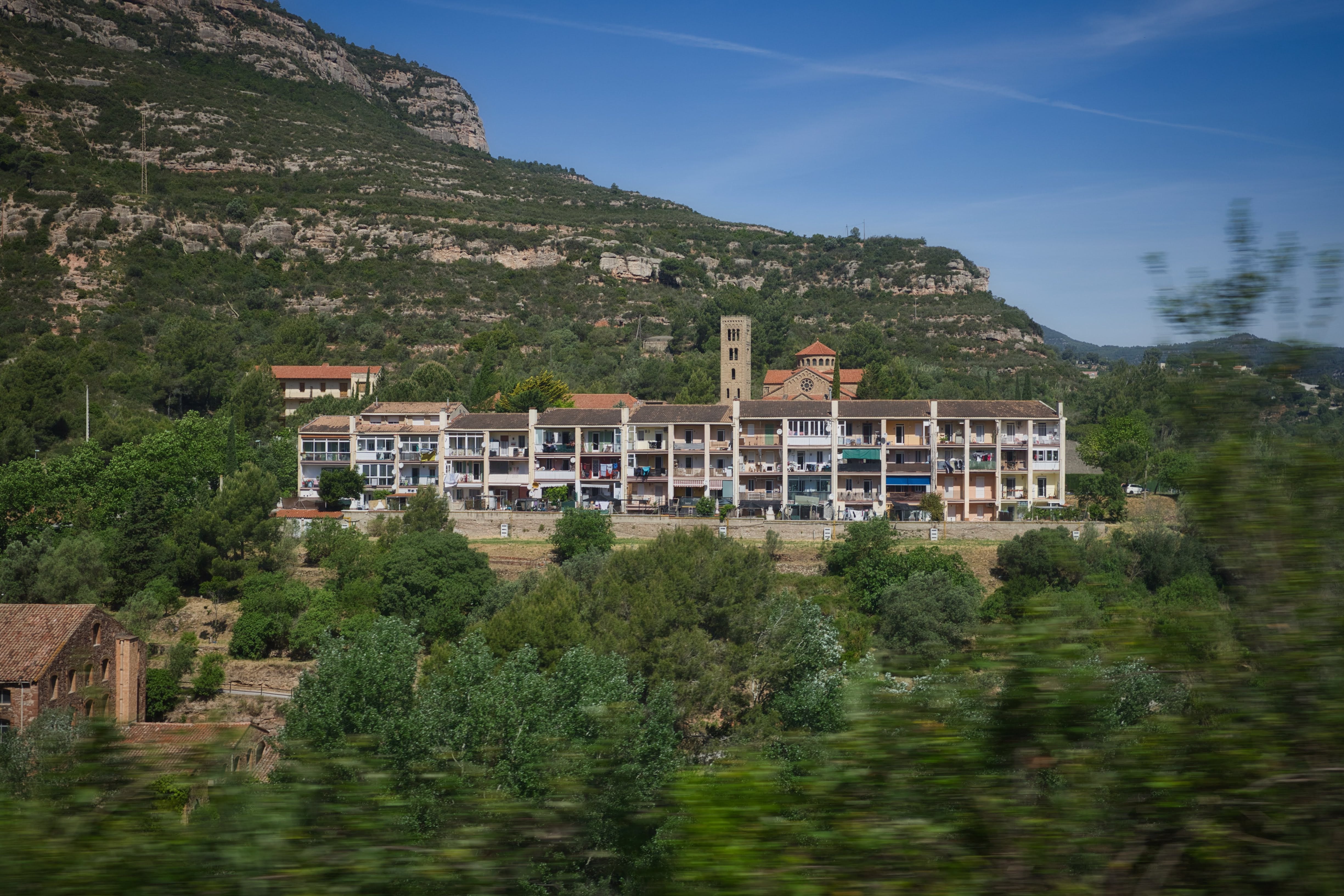
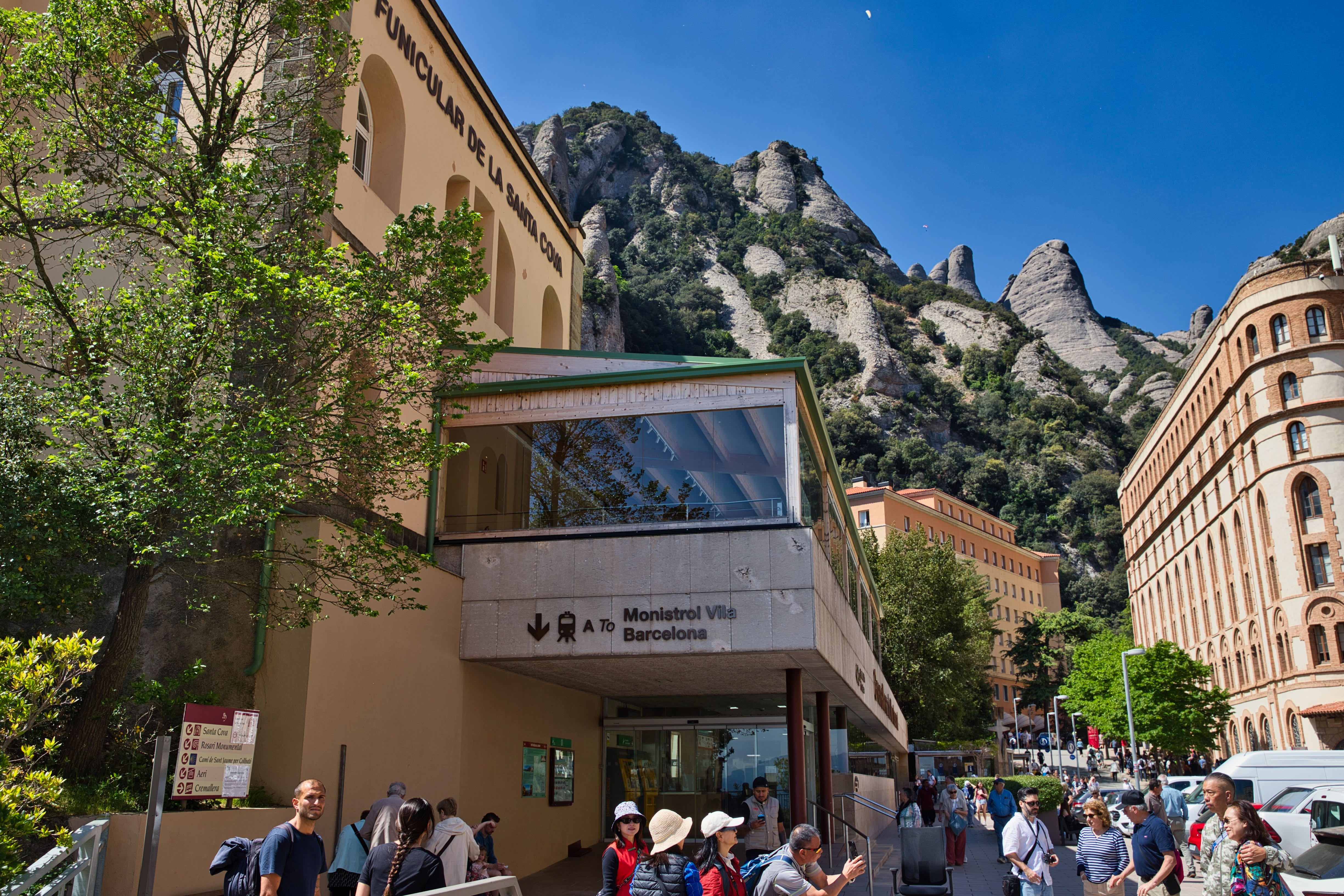
If your time allows, you should also check out two funicular railways that start at the summit station: the Funicular de Sant Joan and the Funicular de Santa Cova. Since I had a train to Marseille to catch that evening, I didn’t have time to explore these funiculars. There is always next time! ∎